1
13. Technical Background
13.1 Terminology
Single Speed
Sample rate range originally used in Digital Audio. Typical applications are 32 kHz (digital radio
broadcast), 44.1 kHz (CD), and 48 kHz (DAT).
Double Speed
Doubles the original sample rate range, in order to achieve higher audio quality and improved
audio processing. 64 kHz is practically never used, 88.2 kHz is quite rare in spite of certain advantages. 96 kHz is a common format. Sometimes called Double Fast.
Quad Speed
Controversially discussed way of ensuring hi-end audio quality and processing by quadrupling
the sample frequency. 128 kHz is non-existent, 176.4 kHz is rare, if at all then 192 kHz is used,
e.g. for DVD Audio.
Single Wire
Standard audio data transfer, where the audio signal's sample rate is equal to the rate of the
digital signal. Used from 32 to 192 kHz. Sometimes called Single Wide.
Double Wire
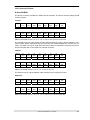
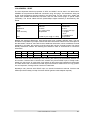
Before 1998 there were no receiver/transmitter circuits available that could receive or transmit
more than 48 kHz. Higher sample rates were transferred by splitting odd and even bits across
the L/R channels of a single AES connection. This provides for twice the data rate, and hence
twice the sample rate. A stereo signal subsequently requires two AES/EBU ports.
The Double Wire method is an industry standard today, however it has a number of different
names, like Dual AES, Double Wide, Dual Line and Wide Wire. The AES3 specification uses
the uncommon term Single channel double sampling frequency mode. When used with the
ADAT format, the term S/MUX is commonly used.
Double Wire not only works with Single Speed signals, but also with Double Speed. As an example, Pro Tools HD, whose AES receiver/transmitter only work up to 96 kHz, uses Double
Wire to transmit 192 kHz. Four channels of 96 kHz turn into two channels of 192 kHz.
Quad Wire
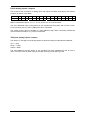
Similar to Double Wire, with samples of one channel spread across four channels. This way
single speed devices can transmit up to 192 kHz, but need two AES/EBU ports to transmit one
channel. Also called Quad AES.
S/MUX
Since the ADAT hardware interface is limited to Single Speed, the Double Wire method is used
for sample rates up to 96 kHz, but usually referred to as S/MUX (Sample Multiplexing). An
ADAT port supports four channels this way.
S/MUX4
The Quad Wire method realizes the transmission of two channels at up to 192 kHz via ADAT.
The method is referred to as S/MUX4.
Note: All conversions of the described methods are lossless. The existing samples are just
spread or re-united between the channels.
User’s Guide ADI-8 DS © RME
31