1
DANGER
safety instructions
3
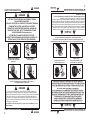
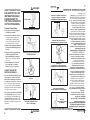
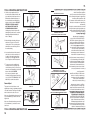
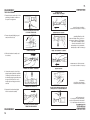
2.Using a fastener as a center punch,
strike the fastener against the work
surface using an average hammer
blow and check the results.
1.Always check the material being
fastened into for hardness before
attempting any fastening operation.
Always wear safety goggles
when performing this test.
Center Punch Test
Never fasten into any base material that
does not pass the Center Punch test.
Failure to assure the suitability of the base
material can result in serious injury to the
eyes or other body parts.
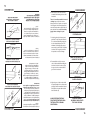
Never fasten into soft base materials, such as
drywall or lumber products. These materials
may allow the fastener to travel completely
through and out the other side, endangering
those in the path of the fastener.
4.If the fastener makes a small
indention into the material, the
material is suitable for fastening.
3.If the material cracks or shatters,
the material is too brittle.
2.If the fastener penetrates the
material easily, the material is
too soft.
1.If the fastener point is flattened,
the material is too hard for a
powder actuated fastening.
Center Punch Test Results
never fasten into soft materials
such as drywall
Never attempt to fasten into very hard or
brittle materials such as cast iron, tile,
glass, or rock of any type. These materials
can shatter, causing the fastener and/or
base material fragments to fly free and
cause serious injury to tool operator
and others.
Unacceptable Base Materials
Never attempt to fasten into any other
type of material. Fastening into other
materials can cause blindness or other
serious injury.
never fasten into very hard or
brittle materials
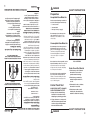
• Masonry Joints (see page 8)
• Structural Steel
• Poured Concrete
Powder-actuated fastening is suitable for
use in the following base materials only:
Acceptable Base Materials
Preparation
DANGER
safety instructions
INSTRUCCIONES DE SEGURIDAD
Peligro
Preparación
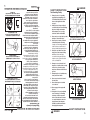
Materiales base aceptables
La fijación por medio de herramientas
activadas con pólvora es solamente
adecuada para usarse en los siguientes
materiales base:
• Concreto vertido
• Acero estructural
• Uniones de mampostería
(vea la página 8)
Nunca intente realizar las fijaciones en
otro tipo de material. La fijación en otros
materiales puede ocasionar ceguera u otras
lesiones graves.
NUNCA INTENTE REALIZAR FIJACIONES
SOBRE MATERIALES MUY DUROS O
FRÁGILES
Materiales base inaceptables
Nunca intente realizar las fijaciones en
materiales muy duros o frágiles tales
como hierro fundido, cerámica, vidrio, o
piedra de cualquier tipo. Estos materiales
se pueden hacer pedazos, haciendo que los
fragmentos del material base o del elemento
de fijación salten y ocasionen lesiones graves
al operador de la herramienta y a terceros.
Nunca fije los elementos sobre materiales
base blandos, tales como paredes de
yeso o productos de madera. Estos
materiales pueden permitir que el elemento
de fijación los atraviese completamente y
salga por el otro lado, poniendo en peligro a
aquellos que se encuentren en el paso del
elemento de fijación disparado.
Nunca realice las fijaciones en un material
base que no pase la prueba de Punzón
de Marcar. El no comprobar la idoneidad
del material base puede ocasionar lesiones
graves a los ojos y a otras partes del cuerpo.
Prueba de Punzón de Marcar
USE SIEMPRE GAFAS DE SEGURIDAD
CUANDO REALICE ESTA PRUEBA.
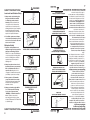
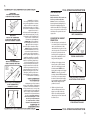
1.Compruebe siempre la dureza del material
que se va a fijar antes de intentar realizar
la operación de fijación.
2.Utilizando un elemento de fijación como
punzón de marcar, golpee el elemento
contra la superficie de trabajo dando
un golpe normal de martillo y vea los
resultados.
Peligro
NUNCA INTENTE REALIZAR FIJACIONES
SOBRE MATERIALES BLANDOS TALES
COMO PAREDES DE YESO
Resultados de la prueba de
Punzón de Marcar
1.Si la punta del elemento de fijación
se aplasta, significa que el material
es demasiado duro para fijar por
este medio.
2.Si el elemento de fijación penetra
muy fácilmente en el material base,
significa que éste es demasiado
blando.
3.Si el material se quiebra o se
fragmenta, significa que es
demasiado frágil.
4.Si el elemento de fijación hace
una pequeña marca en el material,
significa que el material es adecuado
para realizar la operación de fijación.
INSTRUCCIONES DE SEGURIDAD
3