1
1. Read the entire installation manual before beginning the installation. Failure to follow these rules and these instructions for safe installation
and operation could cause a malfunction of the boiler and result in death, serious bodily injury, and/or property damage.
2. Check all applicable state and local building codes and utility company requirements before installation. The installation must conform with
these requirements in their entirety. In the absence of these codes, use NFPA Installation Codes and good industry practice.
3. Before servicing the boiler allow the boiler to cool. Always shut off any electricity and gas supply connected to the boiler prior to servicing.
4. Inspect gas line for leaks.
5. Be certain gas input rate is correct. Over-firing may result in early failure of the boiler sections. This may cause dangerous operation. Over
firing may result in too much air for the pre-mix burner causing poor or loss of combustion.
6. Never vent the products of combustion from this boiler to an enclosed space. Always vent to the outdoors. Never vent to another room or
inside a building.
7. Be sure there is adequate outdoor air supply to the boiler for complete combustion.
8. Follow a regular service and maintenance schedule for efficient and safe operation.
9. Keep boiler area clean of debris and free of combustible and flammable materials.
10. Proper through the wall or through the roof combustion venting shall be in accordance with the materials and methods described in this
manual.
11. This boiler and related hot water heating systems are not do it yourself items. They must be installed and serviced by qualified professionals.
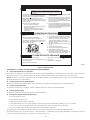
WARNING: This boiler has been equipped for residential installations. If used for commercial applications, any
additional code requirements must be adhered to for installation. This may require additional controls including but not
limited to a low water cut off, a manual reset high temperature limit, and wiring and/or piping modifications. The manufacturer
is not responsible for any field installation changes made to a boiler installation which are not described or acknowledged
in this manual.
INTRODUCTION
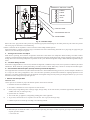
The BW9 is a gas-fired direct vent condensing hot water boiler with cast aluminum heat exchanger sections. A revolutionary cast aluminum heat
exchanger means better heat transfer and thermal storage than similarly sized cast iron boilers, which results in higher efficiency. The heating
system water absorbs large amounts of heat from the cast aluminum heat exchanger, cooling the flue gases and causing condensation. Sealed
combustion, premix gas burner, and low flame temperature means drastically reduced CO and NOx emissions, which contribute to a cleaner and
healthier environment.
The BW9, unlike normal residential atmospheric and induced draft boilers, takes its combustion air directly from the outdoors (sealed combustion)
and does not compete with building occupants for fresh air. Sealed combustion (also known as “direct vent”) is the safest and best way to obtain
plenty of clean combustible air. The induced draft fan draws in the outside combustion air, then takes the cooler flue gases from the heat exchanger
and provides a positive removal of the flue gases from the building through inexpensive and readily available PVC and CPVC pipes.
PROCEDURE 1—BOILER RATINGS AND CAPACITIES
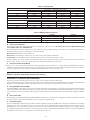
These low pressure gas-fired hot water boilers are design certified by CSA (AGA and CGA) for use with natural and propane gases. The boiler
is constructed and hydrostatically tested for a maximum working pressure of 50 psig (pounds per square inch gauge) in accordance with A.S.M.E.
(American Society of Mechanical Engineers) Boiler and Pressure Vessel Code Section IV Standards for heating boilers.
NOTE: AFUE (Annual Fuel Utilization Efficiency) and Heating Capacity is based on D.O.E. (Department of Energy) test procedure.
NOTE: The BW9 boilers are certified in accordance with ANSI (American Standards Institute) Z21.13 standards as gas-fired direct vent
condensing hot water boilers.
The Heating Capacity indicates the amount of heat available after subtracting the losses out the vent. Most of this heat is available to heat water.
A small portion is heat from the jacket and surfaces of the boiler, and it is assumed that this heat stays in the structure. The Net I=B=R Rating
represents the portion of the remaining heat that can be applied to heat the radiation or terminal units (i.e. finned tube baseboard, cast iron radiators,
radiant floor, etc.). The difference between the Heating Capacity and the Net I=B=R Rating, called the piping and pickup allowance, establishes
a reserve for heating the volume of water in the system and offsetting heat losses from the piping. The Net I=B=R Ratings shown are based on
a piping and pickup factor of 1.15 in accordance with the I=B=R Standard as published by the Hydronics Institute. The Net I=B=R Rating of the
boiler should be greater than or equal to the calculated peak heating load (heat loss) for the building or area(s) served by the boiler and associated
hot water heating systems. The manufacturer should be consulted before selecting a boiler for installation having unusual piping and pickup
requirements.
A.
Boilers for use at High Altitude
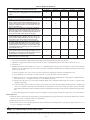
U.S.A. Only—For altitudes above 2000 ft above sea level, input ratings should be reduced at the rate of 4 percent for each 1000 ft above sea level.
Consult the National Fuel Gas Code (NFGC NFPA54-2002/ANSI Z223.1-2002 - latest edition), or the manufacturer for correct orifice sizing
information. High-altitude orifices are available from boiler manufacturer.
Canada Only—For altitudes in the range of 2000-4500 ft above sea level, boilers may be field equipped for use at high altitude by using a certified
field conversion kit. The change in main burner orifice size results in boiler’s input rating being reduced by 10 percent. The conversion shall be
carried out by a manufacturer’s authorized representative in accordance with the requirements of manufacturer, provincial or territorial authorities
having jurisdiction, and in accordance with the requirements of the CAN/CGA-B149.1 and CAN/CGA-B149.2 Installation Codes. The certified
field conversion kit includes a conversion data plate, indicating that the boiler has been converted for high altitude use. The correct conversion
information must be entered on the conversion data plate.
—3—