1
48322 a4:45xxx rev1 11/01/2010 09:26 Page 15
familiar with the unit and make
several loaves of bread before you
begin experimenting. Never exceed
a total amount of 5 cups dry
ingredients (that includes the total
amount of flour, oats, oatmeal,
bran). Use the recipes in this book
to help determine the ratio of dry
ingredients to liquid and amounts
of yeast, sugar, salt, and
oil/butter/margarine to use.
We advise creating your own bread
recipes using the basic mode, then
progress to the others, using the
Baking cycle times chart as a
guide.
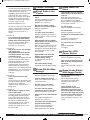
Question 19
Is it important for ingredients to
be at room temperature before
adding them to the baking pan?
Yes, even when the delay timer is
being used. (Water must be
between 21°C and 28°C).
Question 20
Why do the loaves vary in height
and weight? The
wholemeal/wholewheat breads
are always shorter. Am I doing
something wrong?
No, it is normal for wholewheat and
wholemeal breads to be shorter
and denser than basic or French
breads. Wholewheat and
wholemeal flour are heavier than
white bread flour, therefore they
don’t rise as much during the bread
baking process. This is also true for
bread containing fruit, nuts, oats
and bran.
Question 21
Can I premix the yeast with
water?
No, the yeast must be kept dry and
put into the baking pan last, above
the flour. This is especially
important when the delay timer is
being used.
Question 22
Why is there a large hole in the
base of the bread?
This hole has been created by the
kneading blade. Sometimes this
hole is larger than normal. This is
because the dough has rested to
the side of the blade after the
second kneading cycle - normal
with breadmakers. You could
position the dough evenly in the
base of the pan.
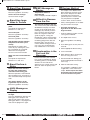
Trouble Shooting
Bread Sinks in the
Centre
Too much liquid or liquid too
warm.
Measure ingredients accurately.
Use liquids at temperatures
between 21°C and 28°C.
Salt was not added, causing
bread to over rise and collapse.
Measure ingredients
accurately.
Too much yeast was added.
Measure ingredients accurately, if
problem persists, reduce yeast by
1⁄4 teaspoon.
High humidity and hot ambient
temperatures can cause bread to
over rise and collapse.
Bake during the coolest part of the
day, Try reducing the yeast by 1⁄4
teaspoon or use liquids direct from
the refrigerator. Do not use the
timer function.
High altitudes can cause the
bread to over rise and then
collapse during baking.
Try reducing the yeast by 1⁄4
teaspoon.
Lid is open during baking.
Do not open the lid during baking.
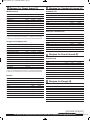
Bread Did Not Rise
Enough
Not enough yeast was added.
Measure ingredients accurately.
Yeast is outdated or inactive.
Never use outdated yeast. Store in
a cool, dark place.
Too little sugar was added.
Measure ingredients accurately.
Too much salt was added,
reducing the action of the yeast.
Measure ingredients accurately.
Water was too hot and killed the
yeast.
Use liquids at temperatures
between 21°C and 28°C.
Bread Rises Too
Much
High humidity and hot ambient
temperatures can cause bread to
over rise.
Bake during the coolest part
of the day. Try reducing the yeast
by 1⁄4 teaspoon or use liquids
directly from the refrigerator. Do not
use the Timer function.
Too much yeast.
Measure ingredients accurately.
Too much liquid.
Measure ingredients accurately.
Hot liquids accelerated the yeast
action.
Use liquids at temperatures
between 21°C and 28°C.
Too much flour or not enough
salt.
Measure ingredients
accurately.
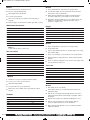
Bread Dry With
Dense Texture
Not enough liquid added.
Measure ingredients accurately.
Flour may be passed the use by
date, or be dry causing wet/dry
imbalance.
Try increasing liquid by 1 tbsp at a
time.
Bread Under Baked
With Soggy Centre
Too much liquid from fresh or
canned fruit.
Always drain liquids well as
specified in the recipe. Water
may have to be reduced
slightly.
Large amounts of rich
ingredients like nuts, butter,
dried fruits, syrups and grains
will make dough heavy. This will
slow down the rising and prevent
the bread from baking through.
Measure ingredients accurately.
Never exceed the amounts in the
recipe.
Yeast has been activated before
programme has started.
Take care that yeast does not
come in contact with liquid
before programme has started.
For details of other Morphy Richards products, please see our website:
15