1
Defrosting / Defrosting and reheating or cooking
Do not refreeze partially or fully
defrosted food. Consume defrosted
food as soon as possible, as it will
lose its nutritional value and spoil if
left for too long. Defrosted food may
only be re-frozen after it has been
cooked.
Defrosting
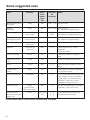
Select the following microwave power
settings to defrost food:
– 80 W
for defrosting very delicate food, e.g.
cream, butter, gateau and cheese.
– 150 W
for defrosting everything else.
Remove the food from its packaging
and place in a microwave safe
container. Do not cover. Turn, stir or
separate the food about halfway
through defrosting.
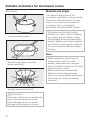
To defrost meat, unpack the frozen
meat and place it on an upturned plate
in a glass or china container so that the
meat juice can run off and be collected.
Turn halfway through defrosting.
Defrosting followed by
reheating or cooking
Deep-frozen food can be defrosted and
immediately reheated or cooked.
After defrosting, select 900 W followed
by 450 W.
Remove the food from its packaging
and place in a covered microwave safe
container for defrosting and reheating
or cooking. Exception: minced meat
should be left uncovered while cooking.
Soups, stew and vegetables should be
stirred several times during the
process. Carefully separate and turn
slices of meat halfway through. Turn
pieces of fish at the halfway stage.
After defrosting followed by
reheating or cooking
Allow the food to stand at room
temperature for a few minutes to enable
the heat to spread evenly throughout
the food.
It is particularly important to observe
food hygiene rules when defrosting
poultry. Do not use the liquid from
the defrosted poultry. Pour it away,
and wash the tray, the sink and your
hands. Danger of salmonella
poisoning.
Fish does not need to be fully defrosted
before cooking. Defrost so that the
surface is sufficiently soft to take herbs
and seasoning.
61