1
Powder and Gels
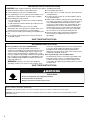
Make sure nothing keeps spray arm(s) from
spinning freely. It is important for the water
spray to reach all soiled surfaces.
■
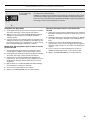
The amount of detergent to use depends on:
How much soil remains on the items - Heavily soiled loads
require more detergent.
The hardness of the water - If you use too little in hard water,
dishes won't be clean. If you use too much in soft water,
glassware will etch.
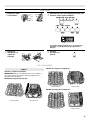
Soft to Medium Water (0-6 grains per U.S. gallon)
[typical water softener water and some city water]
Medium to Hard Water (7-12 grains per U.S. gallon)
[well water and some city water]
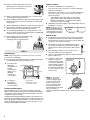
■ Depending on the water hardness, fill the Main Wash section of
the dispenser as shown.
NOTE: Fill amounts shown
Hard Water
are for standard powdered
Soft Water
detergent. Follow instructions
on the package when using
other dishwasher detergent.
Main wash
Pre-wash
■
■
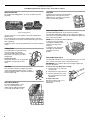
Make sure that when the dishwasher door is closed no items
are blocking the detergent dispenser.
■
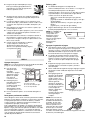
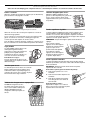
Items should be loaded with soiled surfaces facing down and
inward to the spray as shown. This will improve cleaning and
drying results.
■
Avoid overlapping items like bowls or plates that may trap food.
■
Place plastics, small plates and glasses in the upper rack.
Wash only plastic items marked “dishwasher safe.”
■
To avoid thumping/clattering noises during operation: Load
dishes so they do not touch one another. Make sure lightweight
load items are secured in the racks.
■
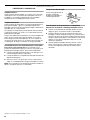
When loading silverware, always place sharp
items pointing down. Mix other items
pointing up and some pointing down.
Add Rinse Aid
■
The dishwasher is designed to use rinse aid for good drying
performance. Without rinse aid the dishes and dishwasher
interior will have excessive moisture. The heat dry option will
not perform as well without rinse aid.
■
Rinse aid keeps water from forming droplets that can
dry as spots or streaks. They also improve drying by
allowing water to drain off of the dishes after the final
rinse.
■
Rinse aid helps to reduce excess moisture on the
dish racks and interior of the dishwasher.
Add Detergent
■
NOTE: If you do not plan to run a wash cycle soon, run a rinse
cycle. Do not use detergent.
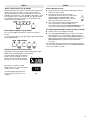
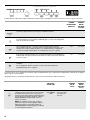
Check the rinse aid indicator. Add rinse aid when indicator
drops to “Add” level.
■
To add rinse aid, turn the
dispenser cap ¼ turn
counterclockwise and lift
off. Pour rinse aid into the
opening until the indicator
level is at “Full.” Replace
the dispenser cap and turn
to “Lock.” Make sure cap
is fully locked.
STEP 2
A
Hard Water
Soft Water
B
PREWASH
C
¹⁄₄ turn to lock
1
-
-
Many detergents now come in premeasured forms (gel packs,
tablets, or powder packs). These forms are suitable for all hardness
and soil levels. Always place premeasured detergents in the main
compartment and close the lid.
Using dishwasher detergent tablets and packs have been proven
better than powder, liquid or gel detergents to reduce filming on the
dishes. By using these tablets and packs, over time this will start to
reduce or eliminate white film. Also, by using a rinse aid you can
minimize repeat buildup of white film.
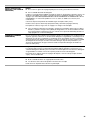
NOTE: For most water
conditions, the factory
-3
-setting of 2 will give good
ll
fi
results. If you have hard
water or notice rings or
spots, try a higher setting.
-Turn the arrow adjuster
- - - inside the dispenser by either
using your fingers or
inserting a flat-blade screwdriver into the center of the arrow and
turning.
- -
A. Cover latch
B. Main wash section
C. Pre-wash section
Premeasured Detergents
4
Add
-
For optimum
performance,
tablet detergent
is recommended.
MAIN WASH
Full
2
■
Fresh automatic
dishwasher
detergent results
in better
cleaning. Store
tightly closed
detergent
container in a
cool, dry place.
USE RINSE AID FOR
BETTER DRYING
Lock
ax
■
Use automatic dishwasher detergent only. Add powder, liquid
or tablet detergent just before starting a cycle.
Add
m
■
Full