1
Laundry weights
Washing hints
The following weights are indicative:
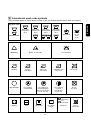
Follow the wash code symbols on each garment
label and the manufacturer’s washing instructions.
Sort the laundry as follows:
whites, coloureds, synthetics, delicates, woollens.
Temperatures
90°
60°
for normally soiled white cottons and linen
(e.g. tea cloths, towels, tablecloths,
sheets...)
for normally soiled, colour fast garments
(e.g. shirts, night dresses, pyjamas....) in
linen, cotton or synthetic fibres and for
lightly soiled white cotton (e.g. underwear).
(cold)for delicate items (e.g. net curtains), mixed
30°-40° laundry including synthetic fibres and
woollens.
1200 g
napkin
100 g
quilt cover
700 g
sheet
500 g
pillow case
200 g
tablecloth
250 g
towelling towel
200 g
tea cloth
100 g
night dress
200 g
ladies’ briefs
100 g
man’s work shirt
600 g
man’s shirt
200 g
man’s pyjamas
500 g
blouse
100 g
men’s underpants
100 g
Before loading the laundry
Removing stains
Never wash whites and coloureds together. Whites
may lose their “whiteness” in the wash.
Stubborn stains may not be removed by just water
and detergent. It is therefore advisable to treat them
prior to washing.
New coloured items may run in the first wash; they
should therefore be washed separately the first time.
Blood: treat fresh stains with cold water. For dried
stains, soak overnight in water with a special
detergent then rub in the soap and water.
Make sure that no metal objects are left in the
laundry (e.g. hair clips, safety pins, pins).
Oil based paint: moisten with benzine stain
remover, lay the garment on a soft cloth and dab the
stain; treat several times.
Button up pillowcases, close zip fasteners, hooks
and poppers. Tie any belts or long tapes.
Remove persistent stains before washing. Rub
particularly soiled areas with a special detergent or
detergent paste.
Dried grease stains: moisten with turpentine, lay
the garment on a soft surface and dab the stain with
the fingertips and a cotton cloth.
Treat curtains with special care. Remove hooks or tie
them up in a bag or net.
Rust: oxalic acid dissolved in hot water or a rust
removing product used cold. Be careful with rust
stains which are not recent since the cellulose
structure will already have been damaged and the
fabric tends to hole.
Maximum loads
Recommended loads are indicated in the
programme charts.
Mould stains: treat with bleach, rinse well (whites
and fast coloureds only).
General rules:
Grass: soap lightly and treat with bleach (whites and
fast coloureds only).
Cotton, linen: drum full but not too tightly packed;
Synthetics: drum no more than half full;
Ball point pen and glue: moisten with acetone (*),
lay the garment on a soft cloth and dab the stain.
Delicate fabrics and woollens: drum no more than
one third full.
Lipstick: moisten with acetone as above, then treat
stains with methylated spirits. Remove any residual
marks from white fabrics with bleach.
Washing a maximum load makes the most efficient
use of water and energy.
For heavily soiled laundry, reduce the load size.
Red wine: soak in water and detergent, rinse and
treat with acetic or citric acid, then rinse. Treat any
residual marks with bleach.
31
ENGLISH
bathrobe
Sorting the laundry