1
Technologies, Inc.
VT8601A Apollo PLE133
Delivering Value
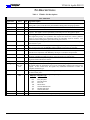
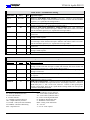
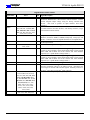
PIN DESCRIPTIONS
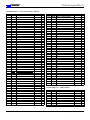
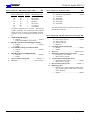
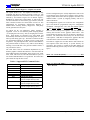
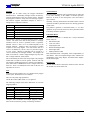
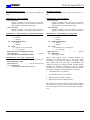
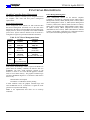
Table 1. VT8601A Pin Descriptions
CPU Interface
Signal Name
Pin #
I/O
Signal Description
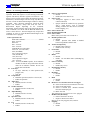
HA[31:3]#
see pin list
IO
HD[63:0]#
ADS#
BNR#
see pin list
J24
D26
IO
IO
IO
BPRI#
E26
IO
DBSY#
H26
IO
DEFER#
F26
IO
DRDY#
HIT#
J23
G24
IO
IO
HITM#
G26
I
HLOCK#
G23
I
J25
E25, F25,
F24, F23,
E24
O
IO
HTRDY#
G25
IO
RS[2:0]#
H25, K23,
H23
IO
A19
E22
O
O
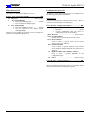
Host Address Bus. Connect to the address bus of the host CPU. These pins are inputs
during CPU cycles, but are driven by the VT8601A during cache snooping operations.
Host CPU Data. These signals are connected to the CPU data bus.
Address Strobe. The CPU asserts ADS# in T1 of the CPU bus cycle.
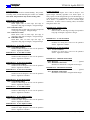
Block Next Request. Used to block the current request bus owner from issuing new
requests. This signal is used to dynamically control the processor bus pipeline depth.
Priority Agent Bus Request. The owner of this signal will always be the next bus owner.
This signal has priority over symmetric bus requests and causes the current symmetric
owner to stop issuing new transactions unless the HLOCK# signal is asserted. The
VT82C693 drives this signal to gain control of the processor bus.
Data Bus Busy. Used by the data bus owner to hold the data bus for transfers requiring
more than one cycle.
Defer. The VT8601A uses a dynamic deferring policy to optimize system performance.
The VT8601A also uses the DEFER# signal to indicate a processor retry response.
Data Ready. Asserted for each cycle that data is transferred.
Hit. Indicates that a cacheing agent holds an unmodified version of the requested line.
Also driven in conjunction with HITM# by the target to extend the snoop window.
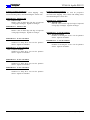
Hit Modified. Asserted by the CPU to indicate that the address presented with the last
assertion of EADS# is modified in the L1 cache and needs to be written back.
Host Lock. All CPU cycles sampled with the assertion of HLOCK# and ADS# until the
negation of HLOCK# must be atomic.
Bus Request 0. Bus request output to CPU.
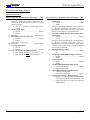
Request Command. Asserted during both clocks of the request phase. In the first clock,
the signals define the transaction type to a level of detail that is sufficient to begin a snoop
request. In the second clock, the signals carry additional information to define the
complete transaction type.
Host Target Ready. Indicates that the target of the processor transaction is able to enter
the data transfer phase.
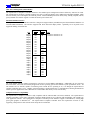
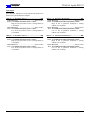
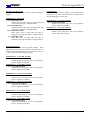
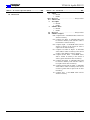
Response Signals. Indicates the type of response per the table below:
RS[2:0]# Response type
000
Idle State
001
Retry Response
010
Defer Response
011
Reserved
100
Hard Failure
101
Normal Without Data
110
Implicit Writeback
111
Normal With Data
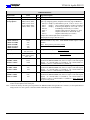
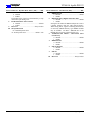
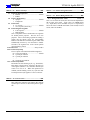
CPU Reset. Reset output to CPU
CPU Reset Delayed. CPU Reset output delayed by 2T.
BREQ0#
HREQ[4:0]#
CPURST#
CPURSTD#
Revision 1.82 October 22, 2001
-15-
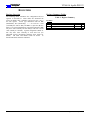
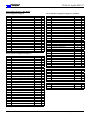
Pinouts