1
TDI® clean diesel
Fuel for thought.
→
→→
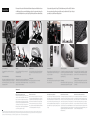
It’s been said that there’s power in numbers. But in this case, that adage not only applies to the 2.0-liter TDI® clean diesel engine’s
150 hp and 236 lb-ft of torque, it also refers to the numerous technological innovations, many of which Audi pioneered, that work
together to make the TDI® engine one of the most advanced diesel engines in the world.
We thought you should know: Diesel sports a greater power density than traditional gasoline, which means that
a gallon of diesel fuel has about 15% more energy than a comparable amount of gas, and combusts more efficiently in the engine. The Audi TDI® clean diesel engines have achieved ultra-low emissions vehicle (Bin-5/ULEV II)
status in all 50 states while reducing emissions by an average of 12% compared to their gasoline equivalents.1
And the brainy attributes don’t hide the brawn—in fact, Audi has dominated the 24 Hours of Le Mans over the
years with Audi TDI® prototype race cars. With these facts in mind, maybe you are thinking that an Audi TDI®
might be your choice—which goes to show that clean diesel really is fuel for thought.
→
→
→
→→
→→
→
S
+
15%
[more energy]
Gasoline
+
Diesel
↑ ↑
↑ ↑
↑ ↑
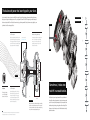
Diesel packs more energy
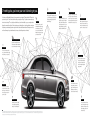
Making diesel cleaner
Variable vane turbocharger
Magnetic direct injection
A new refinement process has
reduced sulfur in diesel fuel by
more than 97% in years past.
Adding turbo power to clean diesel engines, our adjustable vane
turbocharger produces impressive torque punch at mid-range
highway speeds.2
Precise injections help lower the combustion noise normally associated
with diesel engines, while optimizing
the distribution of fuel in the combustion chamber, helping to further
reduce exhaust emissions.
→
↗
+
↗
↗
↗
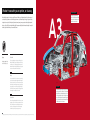
Engine
2.0-liter TDI® clean diesel engine with
150 hp and 236 lb-ft of torque with
AdBlue® exhaust after-treatment
↑
↑ ↑
On average, one gallon of diesel
contains about 147,000 BTUs,
versus 125,000 for gasoline.
→
↑
+
↑ ↑
↘
→ →
→ →
up to
↘
↘
=
30%
better efficiency
↘
↑ ↑
↑ ↑
Combustion
After-exhaust treatment
Increased fuel efficiency
Combining a high compression ratio
with direct injection makes combustion
more efficient, and produces emissions
cleaner than those of engines with a
lower compression ratio.
With innovative diesel particulate
filters and the nontoxic AdBlue®
reducing agent, we eliminate up to
95% of diesel NOX emissions.
Another way diesel creates fewer
emissions is that it gets better mileage, up to 30% more mpg than comparable gasoline engines, in fact.3
Drivetrain
Six-speed Audi S tronic® dual-clutch
transmission and front-wheel drive
1 Based on EPA emissions data. See www.fueleconomy.gov for details. Your emissions will vary and depend on several factors, including your driving habits and vehicle condition. 2 Always obey all speed and traffic
laws. 3 30% better mileage over gasoline engines is based on 2014 A6, A7, A8 L, Q5 and Q7 TDI® models’ average combined mpg as rated by the EPA vs. their 2014 EPA-rated gasoline-powered equivalents. Your mileage
will vary and depends on several factors, including your driving habits and vehicle condition.
→