1
Deco Installation and Operation Manual
8.4.2 Why the chimney should penetrate the highest heated space
When it is cold outside, the warm air in the house is buoyant so it tends to rise. This
tendency of warm air to rise creates a slight pressure difference in the house. Called ‘stack
effect’, it produces a slightly negative pressure low in the house (relative to outside) and a
slightly positive pressure zone high in the house. If there is no fire burning in a heater
connected to a chimney that is shorter than the warm space inside the house, the slight
negative pressure low in the house will compete against the desired upward flow in the
chimney.
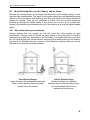
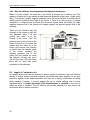
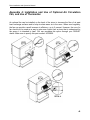
There are two reasons why the
chimney in the house at right will
cold backdraft when it is cold
outside and there is no fire
burning in the stove. First, the
chimney runs up the outside of the
house, so the air in it is colder and
denser than the warm air in the
house. And second, the chimney
is shorter than the heated space
of the house, meaning the
negative pressure low in the
house will pull outside air down
the chimney, through the stove
and into the room. Even the finest
stove will not work well when
connected to this chimney.
8.5 Supply of Combustion Air
In Canada, wood stoves are not required to have a supply of combustion air from outdoors
(except in mobile homes) because research has shown that these supplies do not give
protection against house depressurization and may fail to supply combustion air during
windy weather. However, to protect against the risk of smoke spillage due to house
depressurization, a carbon monoxide (CO) detector/alarm is required in the room in
which the stove is installed. The CO detector will provide warning if for any reason the
wood stove fails to function correctly.
36