1
11.0 Operation
The information which follows is general in nature
and is not intended to be a complete course in
wood turning. Nothing can replace the knowledge
gained by conversation with experienced
woodturners, or consulting books or trade articles.
Above all, simple trial and error will aid in
developing proficiency in the craft.
11.1 Inspection
Before operating the lathe, check that everything is
in proper working order:
1.
Machine is on a level surface.
2.
Check bearings; adjust only if endplay exists.
3.
Check belt; it should be snug but not overly
tight.
4.
Bed ways; keep clean, use steel wool to
remove any rust spots, and apply paste wax to
prevent buildup of rust and finishes.
5.
Tool support; use a mill file to remove nicks
and dings.
6.
Spindle tapers; should be clean and free of
dust and chips for proper seating of tapers.
7.
Tailstock; clean and lubricate quill and locking
device.
8.
Lighting; proper lighting is essential
eliminate shadows and reduce eye strain.
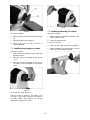
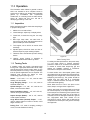
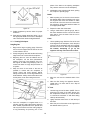
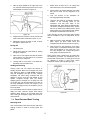
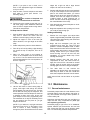
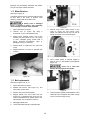
Figure 17
Basic Turning Tools
to
For safety and best performance, keep tools sharp.
If a tool stops cutting or requires excessive
pressure to make a cut, it needs to be sharpened.
A number of brand name sharpening jigs and
fixtures are available; however, a woodturner
should learn to sharpen tools freehand.
11.2 Turning Tools
If possible, select only quality, high-speed steel
turning tools. High-speed steel tools hold an edge
and last longer than ordinary carbon steel. As one
becomes proficient in turning, a variety of specialty
tools for specific applications can be acquired. The
following tools provide the basics for most
woodturning projects (see Figure 17):
For best results, use a slow speed grinder (1800
rpm) fitted with a 60-grit aluminum oxide wheel (for
shaping) and a 100-grit alum. oxide wheel (for final
sharpening and touchup). The grinder should be
located near your lathe and at a comfortable
height. A diamond dresser will keep the wheels
true and eliminate glazing.
Skews – 1-1/2" and 1" or 1-1/4", used to make
finishing cuts and details.
Large Roughing Gouge – 1" to 1-1/4", used to
eliminate waste wood.
Never allow the tool to rest in one place on the
wheel, keep it moving and use a light touch.
Spindle Gouges – 1/4", 3/8", 1/2", used to turn
beads, coves and other details.
Carbon steel tools can overheat easily and should
be cooled frequently. If the edge turns blue, it has
lost its temper and should be ground past the blue
area. High-speed steel tools are not as likely to
overheat, but can be damaged if allowed to get red
hot. High-speed steel tools should not be
quenched for cooling. Honing with a diamond lap
or slipstone will save trips to the grinder and keep
the edge fresh.
Deep Fluted Bowl Gouge – 1/4", 3/8" and 1/2",
used for turning bowls & plates.
Square Scraper (Bedan) – 3/8” or 1/2", used to
create square shoulders.
Large Round Nose (Domed) Scraper – 1-1/2",
used to reduce ridges on interior of bowls, round
edges of bowls, etc.
Parting Tool - 1/8", used for scraping, making a
cut-off, or to set diameters for sizing.
14