1
Classic Runabouts • Owner’s Manual Supplement
Chapter 6: Plumbing
Bilge Pump
NOTICE
Discharge of oil, oil waste, or fuel into navigable waters is prohibited by law. Violators are subject to legal action by the local authorities.
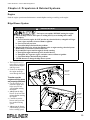
• Your boat has a bilge pump for pumping water out of
the bilge.
• An autofloat switch, mounted next to the bilge pump,
will turn On the bilge pump if bilge water rises above
a preset level.
• You can also turn On the bilge pump yourself using
the switch at the helm.
• The bilge pump is wired directly to the battery. Unless
the battery is dead, the bilge pump should work even
when your boat is unattended.
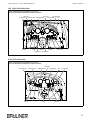
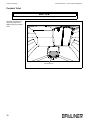
BILGE PUMP
THRU-HULL
Bilge Pump Testing
• The bilge pump is vital to the safety of your boat.
• Test the bilge pump often.
1. Turn On the bilge pump switch at the helm.
2. Make sure that water in the bilge is pumped overboard.
• If there is water in the bilge and the pump motor is running but not pumping, inspect the discharge hose for a kink
or collapsed area.
• If the discharge hose looks okay, check the bilge pump housing for clogging debris (see below).
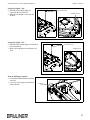
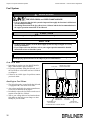
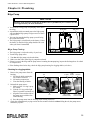
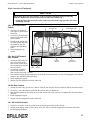
Checking for clogging debris:
1. Remove the pump motor from the
PUMP
housing:
TAB
"O" RING
HOUSING
MOTOR
a. Lift the tab while rotating the
fins counter-clockwise.
b. Lift out the pump motor.
c. Clear the housing of debris.
2. Reinstall the pump motor:
a. Make sure the "O" ring is properly seated.
b. Coat the "O" ring with a light
film of vegetable or mineral oil.
c. Align the cams on either side of
CAM (TYPICAL
SLOT (TYPICAL
FIN
OPPOSITE SIDE)
OPPOSITE SIDE)
the pump motor with the slots
on the housing.
d. Press the pump motor into the housing while twisting clockwise.
3. Check the reinstallation by trying to twist the fins counter-clockwise without lifting the tab; the pump motor
should stay in place.
35