1
WARNING
Hot slag can cause fires and serious injury
from burns! Be sure to wear protective clothing and eye gear when using the Overhead
Position.
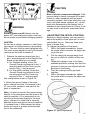
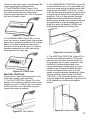
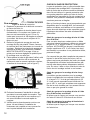
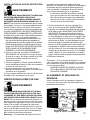
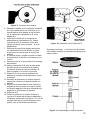
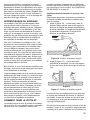
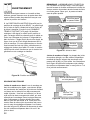
4. The OVERHEAD POSITION (Figure 24) is
the most difficult welding position because
gravity is pulling at the weld puddle trying to
make it drip off the work piece. Angle A (see
HOLDING THE GUN - p.19) should be maintained at 60 degrees, the same as in the flat
position. Maintaining this angle will reduce the
chances of molten metal falling into the nozzle
should it drip from the weld puddle. Angle B
should be held at zero degrees so that the
wire is aiming directly into the weld joint. If
you experience excessive dripping of the weld
puddle, select a lower heat setting. Also, the
weave bead tends to work better than the
stringer bead when welding overhead.
NOTE: WHEN USING SELF-SHIELDING
FLUX-CORE WIRE it is very important to
thoroughly chip and brush the slag off each
completed weld bead before making another
pass or the next pass will be of poor quality.
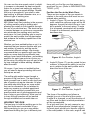
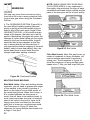
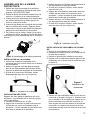
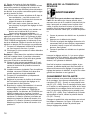
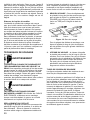
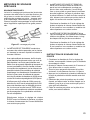
Figure 25. Butt Joints
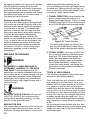
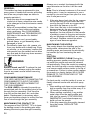
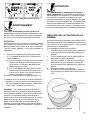
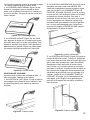
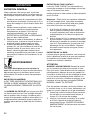
Fillet Weld Joints. Most fillet weld joints, on
metals of moderate to heavy thickness, will
require multiple pass welds to produce a
strong joint. The illustrations in Figure 26
show the sequence of laying multiple pass
beads into a T fillet joint and a lap fillet joint.
Figure 24. Overhead Position
MULTIPLE PASS WELDING
Butt Weld Joints. When butt welding thicker
materials, you will need to prepare the edges
of the material to be joined by grinding a
bevel on the edge of one or both pieces of
the metal being joined. When this is done, a
V is created between the two pieces of
metal, that will have to be welded closed. In
most cases more than one pass or bead will
need to be laid into the joint to close the V.
Laying more than one bead into the same
weld joint is known as a multiple-pass weld.
The illustrations in Figure 25 show the
sequence for laying multiple pass beads into
a single V butt joint.
22
Figure 26. Fillet Weld Joints