1
Body Builders Layout Book
5
ELECTRICAL WIRING
ELECTRICL LOAD LIMITATIONS
If the total electrical load on a factory circuit, after the
addition of electrical equipment, is less than 80% of the
fuse or circuit breaker protection rating in that circuit or
less than the capacity of some limiting component
(switch, relay, etc.), the items to be added can be
connected directly to that circuit. For fuses located in
the engine compartment, the electrical load should not
exceed 60% of the fuse or circuit breaker protection
rating. If the total electrical load to be added on a
factory circuit exceeds the value of the circuit
protection, or the value of some limiting component, the
items to be added cannot be added directly to the
circuit.
● Additional
loads cannot be driven by the Body
control Module (BCM), they must be driven by an
auxiliary relay. The coil of the relay can be fed from
the factory wiring (now acting as a signal circuit) with
the added wiring providing the power feed to the
added electrical device through the relay power
contacts. (The relay selection is important and
depends on current requirements, number of cycles
expected in the relay lifetime, whether the relay is to
be operated intermittently or for long periods of time,
and whether the relay is exposed to weather
conditions or is installed in a protected area. When
the current requirements of a circuit exceed the
capacity of an available relay, more than one relay
can be used if the circuit is wired to split the load).
● The factory wiring should not be used as a power
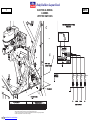
feed to the relay power contacts or switches. Battery
power is to be supplied from the starter motor
solenoid positive terminal for added circuits requiring
a maximum of 30 amps or directly from the battery
positive terminal for added circuits requiring
greater than 30 amps of current.
Caution: Never use the stud on the underhood fuse
panel as a junction point.
Circuit protection (fuses or circuit breakers) must be
provided for all added wiring. The protection device
rating should not exceed the current requirements for
the add-on components and should be installed as
close to the point of tapped power as possible.
2014
ELECTRICAL WIRING
GENERAL PRACTICES
ADDITION OF LIGHTS OR ELECTRICAL DEVICES (Cont'd)
Wire Gage
1. When adding wiring, the wire gage size should be
determined as follows:
● Where wire is spliced to extend a circuit, the
added wire should have a gauge at least that of
the circuit being lengthened.
● When wire is being added to feed add-on devices,
the Wire Gage Table on this page should be used.
NOTE: The current capacity of a given wire varies
with temperature and type of insulation. The table,
however, represents generally accepted values as a
guide.
MODEL YEAR
2. All added underhood or underbody wiring should
have a thermostat insulation (such as Hypalon or
Cross-linked polyethylene).
The following specifications typically apply:
● SAE specifications J1128 type SXL, GXL or TXL
except for battery cables
● SAE specifications J1127 type SGX or STX for
battery cables.
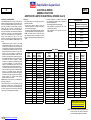
WIRE GAGE TABLE
Wire Gage
Maximum Current Capacity
(Plastic Insulated Copper Wire)
20
10 Amps
18
15 Amps
16
20 Amps
14
25 Amps
12
30 Amps
10
40 Amps
BULB CHARTS
BULB
TRADE
NUMBER
CANDLE
POWER
CURRENT @
RATED
VOLTAGE
BULB
TRADE
NUMBER
67/97
4
0.69 A @ 13.5V
3057K (minor)
168
3
0.35 A @ 14.0V
3155K
192
194
3
2
0.33 A @ 13.0V
0.27 A @ 14.0V
3156 (P27W)
3157 (P27/2W) (major)
211-2
12
0.97 A @ 12.8V
3157 (P27/2W) (minor)
212-2
6
0.74 A @ 13.5V
3157A (major)
578
579
9
0.78 A @ 12.8V
3157A (minor)
9
0.8 A @ 12.8V
3157K (major)
CANDLE
POWER
CURRENT @
RATED
VOLTAGE
HALOGEN
BULB
TRADE
NUMBER
CANDLE
POWER
WATTS @
RATED
VOLTAGE
2
0.48 A @ 14.0V
21
1.6 A @ 12.8V
H1
117
55W @ 12.0V
2.1 A @ 12.8V
H3
121
55W @ 12.0V
2.1 A @ 12.8V
HB2 (9003) (low)
76
55W @ 12.0V
3
0.59 A @ 14.0V
HB2 (9003) (high)
125
60W @ 12.0V
24
2.1 A @ 12.8V
9005 (HB3)
135
65W @ 12.8V
0.59 A @ 14.0V
9006 (HB4)
80
55W @ 12.8V
32
2.1 A @ 12.8V
9007 (HB5) (low)
80
55W @ 12.8V
107
65W @ 12.8V
—
55W @ 12.8V
32
32
2.2
3
0.59 A @ 14.0V
9007 (HB5) (high)
40
2.23 A @ 12.8V
H13/9008 (low)
3457AK (major)
30
2.23 A @ 12.8V
H13/9008 (high)
—
65W @ 12.8V
3457AK (minor)
2.2
0.59 A @ 14.0V
H7
125
55W @ 12.0V
0.54 A @ 13.5V
3457K (major)
40
2.23 A @ 12.8V
H9
167
65W @ 12.0V
1.5
0.54 A @ 13.5V
3457K (minor)
3
0.59 A @ 14.0V
H11
107
55W @ 12.8V
921
21
1.4 A @ 12.8V
3757AK (major)
24
2.1 A @ 12.8V
H6054 (low)
—
55W @ 12.8V
922
15
0.98 A @ 12.8V
3757AK (minor)
2.2
0.59 A @ 14.0V
H6054 (high)
—
65W @ 12.8V
1157A (major)
24
2.1 A @ 12.8V
4057K (major)
32
2.23 A @ 12.8V
9140
48
40W @ 12.8V
1157A (minor)
2.2
0.59 A @ 14.0V
4057K (minor)
2
0.48 A @ 14.0V
9145 (H10)
65
45W @ 12.8V
3057 (major)
32
2.1 A@ 12.8V
4157K (major)
32
2.23 A @ 12.8V
3057 (minor)
32
2.1 A @ 12.8V
4157K (minor)
3
0.59 A @ 14.0V
3057K (major)
32
2.1 A @ 12.8V
W5W
4
0.4 A @ 12.0V
904
4
0.69 A @ 13.5V
3157K (minor)
5.3
0.69 A @ 13.5V
3456K
906
6
0.69 A @ 13.5V
912
12
1.0 A @ 12.8V
916
2
916NA
904NA
Additional Electrical information
can be accessed via the web at:
www.fleet.ford.com/truckbbas
under the “Bulletins” tab.
NOTE: The final stage manufacturer is responsible for
ensuring that the final vehicle configuration
meets all applicable regulatory requirements.
www.fleet.ford.com/truckbbas