1
SERVICING
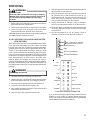
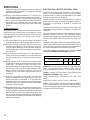
NOTE: This charging procedure can only be done in the
cooling mode of operation. (Early production "a" models
only.) All models with compressor process tube access
valve can be processed in heating cycle if this valve is
used.
If the test shows:
When charging a remote condensing unit with a non-matching evaporator coil, or a system where the charge quantity is
unknown, alternate charging methods must be used. These
systems must be charged according to subcooling or superheat.
d. Low amp draw at compressor.
a. Below normal high side pressure.
b. Above normal low side pressure.
c. Low temperature difference across coil.
and the charge is correct. The compressor is faulty - replace
the compressor. NOTE: THIS TEST CANNOT BE DONE IN
THE HEATING MODE
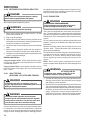
Verification of proper rotation of Scroll Compressors is made
as follows.
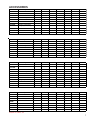
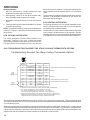
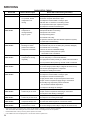
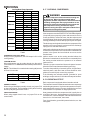
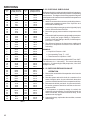
SYSTEM SUPERHEAT
NOTE: The compressor may run backwards (noisy operation) for 1 or 2 seconds at shutdown. This is normal and
does not harm the compressor.
Return Air Temperature
(°F Drybulb)
Ambient Condenser
Inlet Temp.
(°F Drybulb)
65
70
75
115
100
80
85
3
5
5
95
5
5
5
90
7
12
18
85
5
10
17
20
80
5
12
21
26
75
5
10
17
25
29
70
5
14
20
28
32
65
60
13
19
26
32
35
17
25
30
33
37
Coils having flow control restrictors should be charged to
match the System Superheat chart above. Coils with thermostatic expansion valves (TXV's) should be charged by subcooling. See "Checking Subcooling and Superheat" sections in this manual.
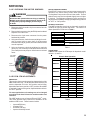
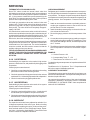
Due to their design, Scroll compressors are inherently more
tolerant of liquid refrigerant.
NOTE: Even though the compressor section of a Scroll compressor is more tolerant of liquid refrigerant, continued floodback or flooded start conditions may wash oil from the bearing surfaces causing premature bearing failure.
If a restriction is located, replace the restricted part, replace
drier, evacuate and recharge.
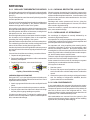
S-104 CHECKING COMPRESSOR EFFICIENCY
1. Install gauges and verify that the suction pressure drops
while the discharge pressure increases.
2. Listen for normal compressor sound levels. Reverse rotation results in elevated or unusual sound levels.
3. Reverse rotation will result in substantially reduced amp
draw from tabulated values.
To correct improper rotation, switch any two power supply
leads at the outdoor unit contactor.
The 3 phase Scroll Compressors are direction of rotation sensitive. They will rotate in either direction depending on the
phasing of the power. There is no negative impact on durability caused by operating 3 phase compressors in reversed
rotation. The compressors internal protector will trip, de-energizing the compressor. Continuted operation of 3 phase
scroll compressors with the rotation reversed will contribute
to compressor failure. All 3 phase scroll compressors should
be checked for correct phase rotation.
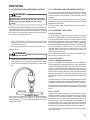
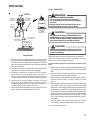
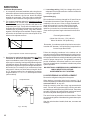
S-105B THERMOSTATIC EXPANSION VALVE
The expansion valve is designed to control the rate of liquid
refrigerant flow into an evaporator coil in exact proportion to
the rate of evaporation of the refrigerant in the coil. The
amount of refrigerant entering the coil is regulated since the
valve responds to temperature of the refrigerant gas leaving
the coil (feeler bulb contact) and the pressure of the refrigerant
in the coil. This regulation of the flow prevents the return of
liquid refrigerant to the compressor.
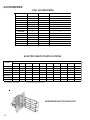
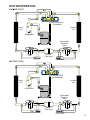
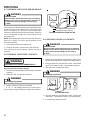
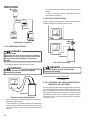
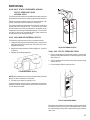
The illustration below shows typical heat pump TXV/check
valve operation in the heating and cooling modes.
The reason for compressor inefficiency is broken or damaged suction and/or discharge valves, or scroll flanks on Scroll
compressors, reducing the ability of the compressor to pump
refrigerant vapor.
The condition of the valves or scroll flanks is checked in the
following manner.
1. Attach gauges to the high and low side of the system.
2. Start the system and run a "Cooling Performance Test.
40
COOLING
HEATING