1
audibility within the volumes of the other elements; one that "fades-out" sinks to
inaudibility within the existing volumes.
Fade
In image production, a very common transition with two variations. A fade-in creates
the impression of a scene emerging from darkness. A fade-out creates the impression
of a shot or scene falling into darkness. They are used often to mark the beginnings
and endings of sequences in a program.
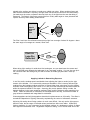
Figure & Ground The distinction between perceptual objects and the space surrounding them. A
figure is generally observed as lying in front of an uninterrupted ground- the most
elementary representation of depth in drawing and painting. (Rudolf Arnhiem) The
figure plane is often considered to be positive and the area(s) surrounding the figure
to be "negative space(s)" as there is usually a difference in tonality between the
figure and the ground.
Film/Video Frame The smallest unit of image in serial image systems. In film, frames are projected
at the rate of 24/second, sound speed. In video, frames are scanned at the rate of
30/second and each video frame is actually comprised of two video "fields." The
term, "still" from is a photographic print made from one frame of film or one field or
frame of video.
Foley
A term derived from the name of an artist who developed an uncanny ability to
simulate a wide variety of sounds with assorted object, body and mouth sounds.
"Foley" performances are recorded and edited-into (dubbed) soundtracks in
synchronization with on-screen events.
Foreground Sounds In soundtrack space, the loudest element(s). Because foreground sounds
usually lead the attention of the viewer, they work best when they have interesting
sonic qualities. Voice and tonally complex effects with considerable variation in
amplitude (volume) and tonality (frequency) are most common.
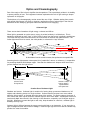
Foreground/Background
Related to the perception of figure/ground, but a specific awareness
about video images recognizing that the depth of pictorial space is often reduced to
only two planes. With video camera generated images, detail is much more evident in
foreground objects.
Form
The materiality of a representation including all of the qualities of those materials.
Format
The shape a presented picture. For rectangular pictures, the ration between the
height and the width. In motion picture film and NTSC video, 3 units high by 4 units
wide.
Freeze Frame
A printing technique that allows one film frame to remain on the screen for a longer
period of time. A similar effect can be achieved with video.
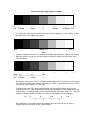
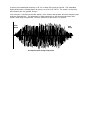
Frequencies Sound is created when an object vibrates. The vibration rates (frequencies)
determine the tonalities produced and most sounds contain several frequencies.
Human ears can detect frequencies from 20-20,000 cycles per second. Lower
vibration rates create low pitched tones and higher vibration rates create high
pitched tones.
Frequency Range The range of tones (frequencies) produced by a sound source or reproduced by
a sound system. Three regions of the range commonly referred to are: Low (20-250
Hz) Middle (250- 4,000 Hz) and High (4,000 -20,000 Hz).
Gaze/Look
A pictorial force created by the direction that a subject is looking in a film or video
image.
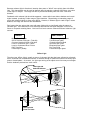
Gestalt
The immediate impact of an image on the eyes. As defined by Rudolf Arnheim: "A
field whose forces are organized in a self-contained, balanced whole. In a gestalt,
components interact to such an extent that changes in the whole influence the
nature of the parts, and vice versa."