1
SITE PREPARATION
Protection
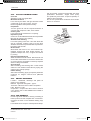
Protect from damage trees which are required to
remain. Do not remove topsoil from the area within
the dripline of the trees and keep this area free of
construction material and debris.
Excavation
If excavating near trees required to remain, use
hand methods to locate, expose and cleanly remove
the roots on the line of excavation.
Damage
If a tree, which is marked to remain, is damaged
and repair work is considered impractical, or is
attempted and fails, remove the tree and the root
system, if so directed. Replace the tree with a tree
of the same species and a similar condition and size
or pay compensation.
Compensation for damage to existing vegetation
shall be borne by the Contractor as a negative
variation to the Contract and determined as
follows:
Maximum valuation: $2500 per tree
Minimum valuation: $250 per tree
2.4
ENVIRONMENTAL PROTECTION
Erosion control
Avoid erosion, contamination, and sedimentation of
the site, surrounding areas, and drainage systems.
Dewatering
Keep the site free of water and prevent water flow
over new work.
2.5
SITE CLEARING
Extent
Limit clearing to areas to be occupied by construction,
paving or landscape work.
Clearing operations
Remove everything on or above the site surface,
including rubbish, scrap, grass, vegetable matter
and organic debris, scrub, trees, timber, stumps,
boulders and rubble. Remove grass to a depth just
sufficient to include the root zone.
Mulching
Mulch all demolished aerial vegetation and reduce
to pieces not larger than 75 X 50 X 15 mm and
stockpile for reuse or remove from site.
Grubbing
Grub out or grind stumps and roots over 75 mm
diameter to a minimum depth of 500 mm below
subgrade under construction, and 300 mm below
the finished surface in unpaved areas.
Removal of topsoil
General: Remove the topsoil layer of the natural
ground which contains substantial organic matter
over the areas to be occupied by construction and
paving.
Maximum depth: 100 mm.
Topsoil stockpiles
Stockpile site topsoil required for re-use. Protect
stockpiles from contamination by other excavated
material, weeds and building debris.
Surplus material
Take possession of surplus material and remove it
from the site.
2.6
EXCAVATION
Extent
Excavate to give the levels and profiles required for
construction, site services, paving, and landscaping.
Allow for compaction or settlement.
Marking
Before commencing excavation, locate and mark
existing underground services in the areas which
will be affected by the groundworks operations
including clearing, excavating and trenching.
Foundations
After excavation, confirm that the bearing capacity
is adequate.
Bearing surfaces
Provide even plane bearing surfaces for loadbearing
elements including footings. Step for level changes.
Make the steps to the appropriate courses if
supporting masonry.
Reinstatement
If excavation exceeds the required depth, or
deteriorates, reinstate with fill to the correct depth,
level and bearing value.
Grading
Grade the ground surface externally and to drain
ground or surface water away from buildings without
ponding.
2.7
SURFACE PREPARATION
General
Before placing fill, ground slabs or load bearing
elements, remove loose material, debris and
organic matter and compact the ground to achieve
the required density.
Source of fill
Provide fill free from organic matter, imported on
to the site from an approved source unless the fill
type can be provided from spoil recovered from the
excavations or designated borrow pits.
Fill types
General fill: Inorganic material, maximum particle
size 75 mm, plasticity index not exceeding 15%.
Select fill: Naturally occurring material, crushed
or quarried stone, crushed gravel, or a mixture of
crushed or quarried material free of lumps of clay
and from organic or other deleterious material
complying with the following requirements:
STANDARD SPECIFICATION - BUILDINGS
DPI REFERENCE TEXT - APRIL 2009
PAGE 7
Specifications March 2009.indd 7
11/03/2009 11:47:09 AM