1
INSTALLATION
CHIMNEY CONFIGURATIONS
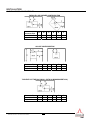
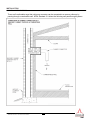
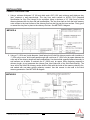
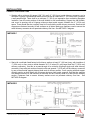
5. A listed factory-built wall pass-through system may be used if installed in accordance with the
manufacturer’s instructions.
Additional requirements pertaining to wall pass-through systems:
1. Insulation material used as part of a wall pass-through system must be a non-combustible material and
have a thermal conductivity of 1.0 Btu • in./ft.² • °F (4.88 kg • cal/hr • m² • °C) or less.
2. All clearances and thicknesses are minimums: larger clearances and thickness are acceptable.
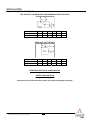
3. A chimney thimble, as shown in the diagrams for Methods C and D respectively, must allow for removal
of the chimney connector for cleaning. The chimney thimble must be of ASTM C31 5 fireclay with 5/8"
minimum wall thickness, or material of equivalent durability. The inside diameter of the thimble must be
sized for the snug fit of a 6" diameter chimney connector pipe. The thimble must be installed without
damage to the chimney flue. The thimble must extend through the chimney wall, but not beyond the
inner surface of the chimney flue. The thimble must be permanently cemented in place with high
temperature cement.
4. A chimney connected to a masonry chimney, except for Method B, must extend through the wall pass-
through system to the inner face of the chimney flue, but not beyond. It does not have to be fastened in
place as long as it cannot accidentally be pulled out of the chimney or shoved into the chimney flue. If
fasteners are used to secure the chimney connector to a masonry chimney, the fasteners must not
penetrate the chimney flue liner.
5. Any material used to seal any opening or connectors must be noncombustible.
6. Except for chimney configurations as outlined in Method B, connectors to a masonry chimney shall
extend in one continuous section through the wall pass-through system and the chimney wall, and must
be up to but not past the inner flue liner face.
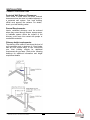
NOTE:
If the chimney connector does not have to pass through a combustible wall to get to a masonry chimney,
simply connect directly to the masonry chimney’s thimble as described and shown in the diagrams for
Methods C and D.
The chimney connector should extend into the chimney thimble to the inner-face of the chimney flue but not
beyond; if the chimney connector is extended through the chimney thimble into the chimney flue, resistance to
the flow of smoke and gases up the chimney will occur causing an adverse affect on the operation and
performance of the stove and venting system.
19