1
TABLE OF CONTENTS
Precautions ……………………………………………………………………………………………………………………i
Table of Contents/ Product Description …………………………………………………………………………………1
Features ………………………………………………………………………………………………………………………2
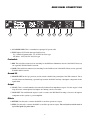
Controls/Connections ……………………………………………………………………………………………………3-5
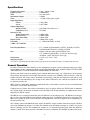
Specifications…………………………………………………………………………………………………………………6
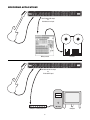
General Operation/Applications ………………………………………………………………………………………6-8
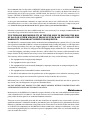
Service/Maintenance ………………………………………………………………………………………………………9
Warranty Information ………………………………………………………………………………………………………9
Congratulations on your purchase of the BBE BMAX Bass Guitar Pre-amp!
The BBE BMAX is an extremely versatile pre-amp which is capable of achieving a wide array
of tones while conveniently configuring itself into any application. No extra devices are needed
to get flawless performance out of the BBE BMAX.
The BMAX is a high quality bass preamp/processor with applications both in the recording
studio and on the road in demanding live applications. The BMAX has the warmth and
dynamic range usually found in all-tube designs and will deliver the punch and clarity of the
best all-tube preamplifiers. The fit and finish is solid with a professional feel that will appeal
to professional Bassists and semi-pro players alike.
It features a class A/B front-end, the input of which emulates the loading effect that the
input of a “classic-design” tube preamp would present to the bass pickups, this is one of the
key aspects in the “warmth” and “punch” of all-tube preamp designs.
The BBE Process—"What it Is"
Loudspeakers have difficulty working with the electronic signals supplied by an amplifier. These difficulties cause such major phase and amplitude distortion that the sound reproduced by speaker differs significantly from the sound produced by the original source.
In the past, these problems proved unsolvable and were thus delegated to a position of secondary importance in audio system design. However, phase and amplitude integrity is essential to accurate sound
reproduction. Research shows that the information which the listener translates into the recognizable
characteristics of a live performance are intimately tied into complex time and amplitude relationships
between the fundamental and harmonic components of a given musical note or sound. These relationships define a sound's “sound”.
When these complex relationships pass through a speaker, the proper order is lost. The higher frequencies are delayed. A lower frequency may reach the listener's ear first or perhaps simultaneously with that
of a higher frequency. In some cases, the fundamental components may be so time-shifted that they
reach the listener's ear ahead of some or all of the harmonic components.
This change in the phase and amplitude relationship on the harmonic and fundamental frequencies is
technically called “envelope distortion.” The listener perceives this loss of sound integrity in the reproduced sound as "muddy" and “smeared.” In the extreme, it can become difficult to tell the difference
between musical instruments, for example, an oboe and a clarinet.
BBE Sound, Inc. conducted extensive studies of numerous speaker systems over a ten year period. With
this knowledge, it became possible to identify the characteristics of an ideal speaker and to distill the corrections necessary to return the fundamental and harmonic frequency structures to their correct order.
While there are differences among various speaker designs in the magnitude of their correction, the
overall pattern of correction needed is remarkably consistent.
1