1
OptiView Control Center
FORM 160.55-O1 (402)
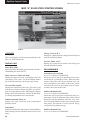
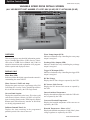
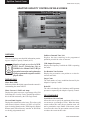
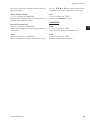
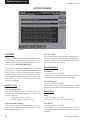
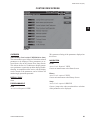
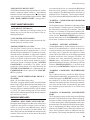
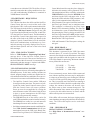
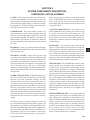
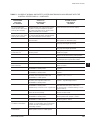
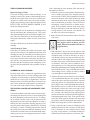
“LEAVING CHILLED LIQUID – LOW
TEMPERATURE”
The Leaving Chilled Liquid Temperature has decreased
to the programmed Shutdown Temperature Setpoint.
The chiller will automatically restart when the temperature increases to the programmed Restart Temperature
Setpoint.
“LEAVING CHILLED LIQUID –
FLOW SWITCH OPEN”
The Chilled Liquid Flow Switch has remained open for
2 continuous seconds while the chiller was running or
failed to close during the System Pre-lube period. The
chiller will automatically restart when the flow switch
closes.
“CONDENSER – FLOW SWITCH OPEN”
The Condenser water flow switch has remained open
for 2 continuous seconds while the chiller was running.
This check is bypassed for the first 30 seconds of “System Run”. The chiller will automatically restart when
the flow switch closes.
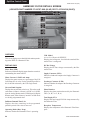
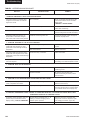
“MOTOR CONTROLLER –
CONTACTS OPEN”
The CM-2 Current module (Electromechanical starter
applications) or Solid State Starter Logic Board (Mod
“A” Solid State Starter applications) has shutdown the
chiller. When detecting a fault condition that places the
starter or motor at risk, these devices open the Motor
Controller contacts “CM” (located on the respective
device and connected between TB6-16 and TB6-53 in
the OptiView Control Center) to initiate a shutdown.
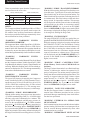
Since there are several different faults that are monitored, LED’s on the respective device illuminate to identify the specific fault that has occurred. Refer to YORK
Manual 160.46-OM3.1 for details of Mod “A” Solid
State Starter initiated shutdowns and 160.55-M1 for
CM-2 initiated shutdowns. The chiller will automatically restart when the Motor Controller contacts close.
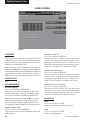
On some shutdowns, the respective device automatically closes the contacts when the fault condition clears.
Other shutdowns require the Operator to perform a
Manual Reset at the respective device.
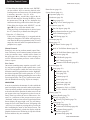
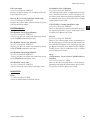
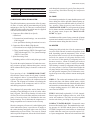
Device
Manual Reset Fault
Automatic Reset Fault
CM-2 Module
Overload
None
Overload
Phase Rotation/Loss
Solid State Starter High Temp(>212°F)
Fault Current
92
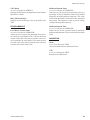
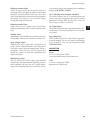
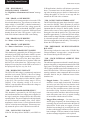
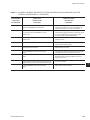
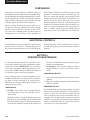
“MOTOR CONTROLLER – LOSS OF
CURRENT”
The Compressor Motor current decreased to 10% Full
Load Amps (FLA) for 25 continuous seconds while the
chiller was running. This could be caused by the starter
de-energizing during run or a defect in the motor current feedback circuitry to the OptiView Control Center. The chiller will automatically restart at the completion of “System Coastdown”.
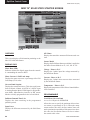
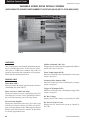
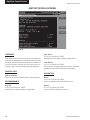
“POWER FAULT”
The CM-2 Current Module (Electro-mechanical starter
applications) or Solid State Starter Logic Board (Mod
“A”) (Solid State Starter applications) has shutdown
the chiller because it detected a fault condition that
places the motor at risk. These devices open and close
the Motor controller “CM” contacts (located on the respective device and connected between TB6-16 and
TB6-53 in the OptiView Control Center) in < 3 seconds to initiate the shutdown and produce this message.
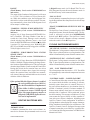
An LED on the respective device illuminates to identify the specific fault that has occurred. Refer to YORK
Manual 160.46-OM3.1 for details of Mod “A” Solid
State Starter initiated shutdowns and 160.55-M1 for
CM-2 initiated shutdowns. The chiller will automatically restart when the contacts close.
Device
CM-2 Module
Solid State Starter
Shutdown
Power fault
Power Fault
Half Phase
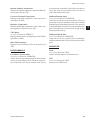
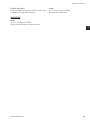
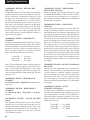
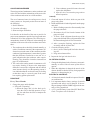
“CONTROL PANEL – SCHEDULE”
The programmed Daily Schedule Setpoint has shut
down the chiller. The chiller will automatically restart
at the next scheduled start time.
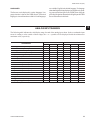
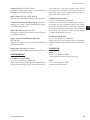
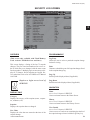
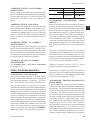
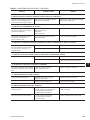
“STARTER – LOW SUPPLY LINE VOLTAGE”
(Mod “A” Solid State Starter”)
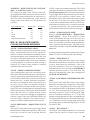
The voltage in any phase of the AC Power Line Voltage supplying the Solid State Starter has decreased to
the low line voltage threshold for 20 continuous seconds. The chiller will automatically restart when the
voltage returns to the restart level. The thresholds are
as follows:
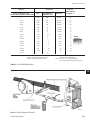
Supply Voltage Range (Volts)
Shutdown (Volts)
Restart (Volts)
380
305
331
High Temp start inhibit (>110°F)
400
320
349
Trigger Board Out-of-Lock
415
335
362
440-480
370
400
550-600
460
502
Supply Voltage Range disabled
none
N/A
YORK INTERNATIONAL