1
Operating Instructions & Parts Manual
General Safety
Information (Continued)
Pre-Installation
All wiring SHOULD
be performed by a
licensed or certified electrician.
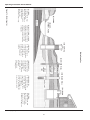
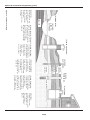
The water supplies illustrated in Figure
16 (on page 8) are possible sources for
water. These water supplies can be
divided into two categories:
11. For maximum safety, the unit should
be connected to a grounded circuit
equipped with a ground fault
interrupter device (GFCI).
12. Before installing the pump, have
the electrical outlet checked by a
licensed or certified electrician to
make sure the outlet is properly
grounded.
13. Make sure the line voltage and
frequency of electrical current supply
agrees with the motor wiring.
14. Do NOT attempt repairs to the
electric motor. All repairs to the
motor must be completed at a
licensed or certified electrical motor
repair shop.
Do NOT touch an
operating motor.
Modern motors are designed to operate
at high temperatures.
15. Avoid kinking electrical cord and
protect electrical cord from sharp
objects, hot surfaces, oil and
chemicals. Replace damaged or worn
cords immediately.
16. Keep fingers and foreign objects
away from ventilation and other
openings. Do NOT insert any objects
into the motor.
Risk of electric
shock! NEVER
connect the green (or green and yellow
wire) to a live terminal!
WATER SUPPLIES
SURFACE WATER
Water from a lake, stream, pond and
cistern. This water is usually not fit
for human consumption, but may be
suitable for washing, irrigation or other
household uses.
GROUND WATER
Water found in the water bearing
stratum at various levels beneath the
earth. Of all the fresh water found on
earth only 3 percent is found on the
surface and 97 percent is underground.
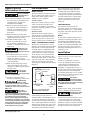
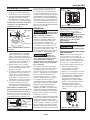
TANKS - CONVENTIONAL STORAGE
The function of the tank is to store a
quantity of water under pressure. When
full, the tank contains approximately
2/3 water and 1/3 compressed air. The
compressed air forces the water out
of the tank when a faucet is opened.
An air volume control automatically
replaces air lost or absorbed into the
water. The usable water, or draw-down
capacity, of the tank is approximately
1/6 of the tanks total volume when
operated on a “20-40” pressure setting
(Figure 1).
AIR VOLUME
CONTROL
BLADDER
17. Use wire of adequate size to
minimize voltage drop at the motor.
Do NOT handle
pump or pump
motor with wet hands, when standing
on a wet or damp surface or when
standing in water. Fatal electrical shock
WILL occur.
Pump motor is
equipped with an
automatic resetting thermal protector and
may restart unexpectedly. Protector tripping
is an indication of motor overheating
because of operating pump at low heads
(low discharge restriction), excessively high
or low voltage, inadequate wiring, incorrect
motor connections,excessive surrounding
air temperature, inadequate ventilation,
and/or defective motor or pump.
CONVENTIONAL
TANK
PRE-CHARGED
TANK
Figure 1 - Conventional and
Pre-charged Storage Tanks
TANKS - PRE-CHARGED STORAGE
A pre-charged storage tank has a
flexible bladder or diaphragm that acts
as a barrier between the compressed
air and water. This barrier prevents the
air from being absorbed into the water
and allows the water to be acted on by
compressed air at initially higher than
atmospheric pressures (pre-charged).
www.waynepumps.com
2
More usable water is provided than
with a conventional type tank. Precharged tanks are specified in terms
of a conventional tank. For example,
a 20 gallon pre-charged tank will have
the same usable water or draw-down
capacity as a 40 gallon conventional
tank, but the tank is smaller in size
(Figure 1).
PRESSURE SWITCH
The pressure switch provides for
automatic operation. The pump starts
when pressure drops to a cut-in setting.
The pump stops when pressure reaches
a cut-out setting.
WELLS
A new well should be pumped clear of
sand before installing the pump. Sand
will damage the pumping parts and
seal. The draw-down level of the well
should not exceed the maximum rated
depth for the pump. The capacity of
the pump will be reduced and a loss of
prime may occur.
Installation
LOCATION
Select a location as close to the water
supply as possible.
Be sure to comply with any state or
local codes regarding the placement
of the pump. The equipment must
be protected from the elements. A
basement or heated pump house is a
good location. Make sure the pump has
proper ventilation. The temperature
surrounding the pump is not to exceed
100° F (38°C) or nuisance tripping of the
motor overload may occur.
This pump is
designed for indoor
installation only. Failure to install indoors
will significantly increase the risk of injury
or death from electrical shock.
PIPING
Piping may be copper, steel, rigid PVC
plastic or flexible polyethylene plastic.
Flexible pipe is NOT
recommended on
suction pipe (inlet pipe).
The pipe must be clean and free of rust
or scale. Use a pipe joint compound
on the male threads of the metal pipe.
Plumber's seal tape should be used with
plastic threads. All connections must be
air tight to insure normal operation.