1
Before operation:
• Carefully study and understand this manual.
• Always wear protective clothing and substantial shoes.
• Give equipment a visual inspection for any loose bolts, worn parts, or cracked welds, and make necessary repairs. Follow maintenance safety instructions included in this manual.
• Be sure there are no tools lying on or in equipment.
• Do not use equipment until you are sure that area is clear, especially around children and animals.
• Don’t hurry learning process or take equipment for granted. Ease into it and become familiar with your new equipment.
• Practice operation of your equipment and its attachments. Completely familiarize yourself and other operators with its operation before using.
• Make sure that brakes are evenly adjusted.
• Make sure tow rating on vehicle is high enough for what it is towing.
• Do not allow anyone to stand between tongue or hitch and towing vehicle when backing up to equipment.
• Securely attach to towing vehicle. Use appropriately sized hitch ball and/or hitch pin with a mechanical retainer and attach safety chains.
• Criss cross chains under tongue and secure to draw bar cage, mounting loops, or bumper frame.
During operation
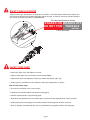
• SAFETY CHAINS OR CABLES If equipment is going to be transported on a public highway, safety chains or cables should be obtained and installed. Always follow state and local regulations regarding safety chains or cables and auxiliary lighting when towing equipment on a public highway. Be sure to check with local law
enforcement agencies for your own particular regulations. Only safety chains or cables (not an elastic or nylon/plastic tow straps) should be used to retain connection between towing and towed equipment in event of separation of primary attaching system.
• Install safety chains by criss crossing chains under tongue and secure to draw bar cage, mounting loops, or bumper frame.
• When attaching the emergency cable Allow adequate slack to keep from activating brakes due to
interference from parts of the coupler or other attachments on the towing vehicle. Each vehicle tongue configuration is different and therefore each should be handled individually to keep the routing free
from entanglements and securely attached to perform as designed in case of emergency disconnection from the towing vehicle.
• Beware of bystanders, PARTICULARLY CHILDREN! Always look around to make sure it is safe to start engine of towing vehicle or move equipment. This is particularly important with higher noise levels, as you may not hear people shouting.
• NO PASSENGERS ALLOWED- Do not carry passengers anywhere on or in equipment.
• Do not clean, lubricate, or adjust your equipment while it is moving.
• When halting operation, even periodically, set towing vehicles parking brake, shut off engine, and remove the ignition key.
• Be extra careful when using on inclines.
• MANEUVER TOWING UNIT AT SAFE SPEEDS.
• Avoid loose gravel, rocks, and holes, they can be dangerous for equipment operation or movement.
• Allow for overall length when making turns.
• Keep all bystanders and pets clear of work area.
• Operate towing vehicle from operators seat only.
• Never leave running equipment attachments unattended.
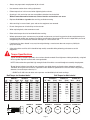
• As a precaution, always recheck hardware on equipment following every 100 hours or 50 miles. Correct all problems. Follow maintenance safety procedures.
Page 5