1
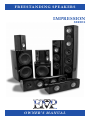
FR E E STA N DI NG SPE A K ER S
IMPRESSION
SERIES
OW N ER’S M A N UA L
Introduction
Congratulations on your purchase of Impression Series freestanding speakers! Your
speakers are the result of many years of research and development dedicated to producing
high quality products for home audio and audio/video systems.
This manual contains features, setup recommendations and specifications for the
Impression Series freestanding speakers. It is recommended you thoroughly read
through the material contained in this manual before connecting your speakers. This
will ensure you have a good understanding of how to setup your speakers for optimum
performance and allow for years of listening enjoyment.
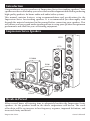
Impression Series Speakers
E55Ti
E5Ti
ES1010i
ES10i
E55Wi
E5Bi
E5Ci
E56Ci
Break-in Period
Allow several hours of listening time to adequately break-in the Impression Series
speakers. As the speakers break-in, the driver suspensions will loosen. The result
of break-in will be an increase in low frequency response, improved definition, and
increased clarity and detail.
Impression Series
1
Owner’s Manual
Care and Cleaning
To maintain speaker appearance, we recommend wiping them down with a clean damp
soft cloth. To clean dust from the grille cloth, use a vacuum with a brush attachment.
Features
The Impression Series speakers feature poly-matrix cone bass drivers and aluminized
poly-matrix cone midrange drivers. These rigid cones resist flexing and contribute to the
accurate reproduction of the audio signal, providing higher overall sound quality.
A quality fabric dome tweeter is used for high frequencies in Impression Series
speakers. Higher power handling is achieved through the use of magnetic liquid
cooling in the tweeter. To protect the tweeter against being over driven, a polyswitch
(a current limiting device) is incorporated in the crossover network.
Each Impression Series speaker model features a crossover network to minimize
driver interaction irregularities and maximize the ability of each driver to accurately
reproduce its respective band of frequencies. Five-way binding posts ensure a solid
electrical connection to these crossover networks.
The Impression Series speakers’ cabinets are constructed of ½-inch medium density
fiberboard because of its inert properties, thereby minimizing sound coloration. The
front baffles are double layered to 1-inch thickness helping to prevent excess acoustic
radiation from the cabinet.
Attaching Speaker Wires
If using a banana jack, attach the matching positive or negative wire and push directly
into binding post top hole.
If not using a banana jack, simply loosen the binding nut to allow the hole in the side
of the terminal to become exposed. Strip ¼-inch of the insulation from the end of
the speaker wire and insert the exposed wire end into the now exposed hole in the
side of the terminal. Tighten the binding nut by turning the nut clockwise until the
speaker wire is secured. Repeat for the other speaker wire(s) as necessary.
Impression Series
2
Owner’s Manual
Room Setup Suggestions
In order to obtain the best possible sound from your speaker system, it is important to
determine where the speakers will sound best in your listening room. Room reflections
from the floor, ceiling and side walls influence the balance, imaging and overall sonic
quality at the listening position. Experiment with speaker placement to determine which
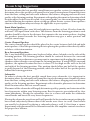
location offers the best overall sound. As a general guide, use the room layout diagram
and the following descriptions when setting up a home theater system. Some speakers
shown in the diagram may not always be applicable to your system.
Front Main Speakers
As a starting point, place your left and right tower speakers at least 15 inches from the
wall and 7-feet apart from each other. The distance from the listening position to each
speaker should be close to the distance that separates the two main speakers. Angling
the speakers inward towards the listening position may give a more spacious and
realistic sound stage.
Center Channel Speaker
The center channel speaker should be placed in the center between both left and right
main speakers. Often this positioning dictates placing the speaker either directly above
or below a television monitor.
Rear Surround Speakers
The 2-way bookshelf speakers may be placed either above, behind or to the sides of the
listening position. The listening position should be centered between the surround
speakers. For best performance you may want to experiment with angling the surround
speakers either towards or away from the listening position. If using E55Wi surround
speakers, the optimal location for these is about 5-6 feet high on the walls to the left
and right of the listening position. This position should allow one half of the speaker
to point forward of the listening position, while the other half of the speaker points
behind the listening position.
Subwoofer
In order to obtain the best possible sound from your subwoofer, it is important to
determine where the subwoofer will sound best in your listening room. Sound reflections
from the floor, ceiling and side walls influence the balance, imaging and overall sonic
quality at the listening position. Experiment with subwoofer placement to determine
which location offers the best overall sound.
Placement of the subwoofer will largely determine quality, quantity and extension of the
bass frequencies within your listening room. Bass frequencies are reinforced by close
room boundaries. Placing the subwoofer close to a corner will make the subwoofer
sound louder and boost the very lowest frequencies.
Placing the subwoofer away from walls will provide the least reinforcement, making the
bass sound subjectively thinner than if the woofer were closer to a wall. Good results
can usually be obtained by placing a subwoofer along a wall 1-3 feet from a corner.
Experiment with placement of the subwoofer and the sub-amplifier controls to achieve
the proper bass balance.
Impression Series
3
Owner’s Manual
Room Setup Suggestions (continued)
IMPORTANT NOTICE REGARDING BASS MANAGEMENT: It is important the signal
being sent to the subwoofer be a non-boosted or “flat” signal. To be sure of this, check
the settings on your receiver or processor to make sure any “bass boost”, “super bass” or
“loudness” is set to Off. In most cases a home theater receiver or processor will determine
the crossover frequency through bass management settings. In this configuration, connect
the receiver’s or processor’s subwoofer output to the subwoofer’s LFE Line Level Input.. Your
subwoofer will now reproduce the bass frequencies the way they were originally recorded.
Use the subwoofer level control and the individual bass management control within the
receiver or processor to adjust the subwoofers’ volume if necessary. Once set, the volume
controls should not need to be altered as the subwoofers’ volume will track with the master
volume control of your receiver or processor.
NOTE: There are several different surround formats available. Dolby Pro-Logic, Pro-Logic II, Dolby Digital and DTS generally
have a 5 speaker plus subwoofer requirement. Dolby Digital EX and DTS ES add a center rear speaker. Dolby TrueHD and DTS
Master Audio available only on Blu-ray disc, generally have a 7.1 requirement. Please consult your audio/video professional to
determine which system is best for you and how many speakers you will require.
Impression Series
4
Owner’s Manual
Subwoofer Safety Instructions
The lightning flash with the arrowhead symbol within an equilateral triangle, is intended
to alert the user to the presence of un-insulated “dangerous voltage” within the product
enclosure that may be of sufficient magnitude to constitute a risk of shock to persons.
The exclamation point within an equilateral triangle is intended to alert the user to the
presence of important operating and maintenance (servicing) instructions in the literature
accompanying the product.
When using your subwoofer, basic safety precautions should always be followed to
reduce the risk of fire, electric shock, and injury.
1. Read and understand all instructions in this users manual before operating the
subwoofer and retain this user manual for future reference.
2. Follow all warnings and instructions in this manual and any marked on the back
of the Subwoofer.
3. Never touch the woofer or push objects of any kind into the woofer.
4. The subwoofer should be connected to a power supply compatible with the power
consumption requirements, see the specifications section of this manual.
5. If mounting the subwoofer on a stand, the wall, or other device only do so as
recommended by an authorized technician.
6. Place the subwoofer a safe distance from all heat sources such as radiators, stoves,
or heaters.
7. Do not operate the subwoofer near water—for example, near a bathtub, kitchen
sink or in a wet basement; or a swimming pool.
8. Power supply cords should be routed so they are not likely to be walked on or
pinched by items placed upon or against them.
9. Any service or repair required must be performed by qualified, authorized
technician.
Impression Series
5
Owner’s Manual
Subwoofer Amplifier Controls and Setup
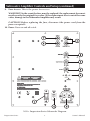
This section describes the functions and/or use for each of the amplifier controls
located on the back of the subwoofer. See the diagram of the back of the subwoofer
on the next page.
1. Voltage Selector Switch: Before connecting the amplifier to any power source
make sure the AC Voltage Selector is set to either 110V or 220V to match the
power voltage in your area.
WARNING! If the voltage setting does not match the AC power supplied, damage
to the Subwoofer Amplifier may result.
2. Volume/Gain Control: The volume/level control should be at the minimum
setting (all the way counter-clockwise) before plugging the subwoofer into an
AC wall socket. Once plugged in, turn the level control up one quarter of a turn
(9 o’clock position) for an initial setting. The level control may be adjusted while
playing to match the subwoofer level with the rest of the system.
IMPORTANT! The volume control should be at the minimum setting (all the way
counter-clockwise) before plugging the subwoofer into an AC wall socket.
3. Crossover Frequency Control: The variable crossover frequency control
allows you to set the low-pass crossover point of the subwoofer anywhere from
40-150 Hz. Increasing the crossover frequency will allow more mid-bass output
from the subwoofer. Decreasing the frequency will allow only deeper bass from
the subwoofer. Experiment with setting the crossover frequency control at
highest setting initially.
NOTE: Read the Important Notice regarding bass management on page 4.
4. Auto Signal Tracking: The subwoofer amplifier uses “smart” signal tracking circuitry.
Once the power cord is plugged in and the switch set to auto, the amplifier automatically
turns on when a signal is detected at the preamplifier or high level inputs and turns off
when no signal has been detected for about 15 minutes.
5. Phase Control: This control changes the phase of the subwoofer. Changing the
phase will change the way the subwoofer and main speakers interact with each
other at the crossover frequency. Varying the phase position may result in more
or less mid bass depending on the phasing between the main speakers and the
subwoofer. Generally, the phase is left at the 0 degrees position.
6. Line Inputs: Line level inputs are used to connect to most full-range stereo receivers
or processors, use both the L and R terminals.
7. LFE In: The Low Frequency Effect input is to connect to the “LFE” bass
management output of the receiver or processor and may also be called
“Subwoofer Output”.
8. LFE Out: This RCA terminal is for “daisy chaining” to another powered subwoofer.
Impression Series
6
Owner’s Manual
Subwoofer Amplifier Controls and Setup (continued)
9. Fuse Access: This is the power fuse access.
WARNING! In the event the fuse must be replaced, the replacement fuse must
match exactly the original fuse value. If the replacement fuse is not of the same
value, damage to the Subwoofer Amplifier may result.
CAUTION! Before replacing the fuse, disconnect the power cord from the
power receptacle.
10. Power: Power on and off switch.
2011 + Impression Series Subwoofer Diagram.
Impression Series
7
Owner’s Manual
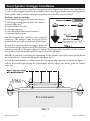
Tower Speaker Outrigger Installation
Use these attractive, tower speaker outriggers for the Impression Series tower speakers to
create a wider support base for the cabinet. These outriggers make your tower speakers
more stable, and are ideal when placing them on a thickly carpeted floor.
Package contents include: 1 each small outriggers for back of cabinet
1 each large outriggers for front of cabinet
4 metal spike feet
4 metal rubber cone feet
4 each top cap nuts
4 each threaded adjustment washers
4 each machine screws
The metal spike feet work best on carpeted
surfaces. The rubber cone feet have been
included for use with wooden or tiled floors.
Attach the tower speaker outrigger plates to
the bottom of the speaker with the machine
screws provided, as shown in figure 2 below. The larger plate should be at the front of
the speaker and the smaller plate at the back of the speaker.
NOTE: To prevent scratching or damaging of the cabinet, turn the tower upside down
on a soft surface when attaching the outrigger feet.
Attach the metal spike or rubber cone feet using the top cap nuts as shown in figure 1.
Adjust the level/height using the adjustment washer above the metal spike or rubber
cone feet.
Impression Series
8
Owner’s Manual
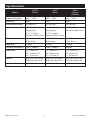
Specifications
E55Ti
Tower
Model
E5Ti
Tower
E5Ci
Center
Channel
Frequency Response:
40Hz – 20kHz
50Hz – 20kHz
60Hz – 20kHz
Sensitivity:
88dB
87dB
87dB
Recommended Power:
50-200 Watts
50-150 Watts
50-120 Watts
Woofer:
(3) 6½” (165mm)
Polypropylene
(2) 6½” (165mm)
Polypropylene
(2) 5¼” (133mm)
Aluminized Poly-matrix
(2) 5¼” (133mm)
(1) 5¼” (133mm)
Aluminized Poly-matrix Aluminized Poly-matrix
Tweeter:
(1) 1” (25mm)
Fabric Dome
(1) 1” (25mm)
Fabric Dome
(1) 1” (25mm)
Fabric Dome
Impedance:
6 Ohms
6 Ohms
6 Ohms
Crossover Frequencies: 120Hz / 3000 Hz
120Hz / 3000 Hz
3000 Hz
Dimensions:
8 /2” (216mm) W
471/2” (1207mm) H
121/4” (311mm) D
8 /2” (216mm) W
351/2” (902mm) H
121/4” (311mm) D
213/4” (553mm) W
71/4” (184mm) H
73/4” (197mm) D
Cabinet:
High-gloss Red Burl or
High-gloss Black Ash
52 lbs. (23.59 Kg)
High-gloss Red Burl or
High-gloss Black Ash
35 lbs. (15.88 Kg)
High-gloss Red Burl or
High-gloss Black Ash
11.5 lbs. (5.22 Kg)
Weight:
Impression Series
1
1
9
Owner’s Manual
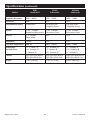
Specifications (continued)
E5Bi
Bookshelf
Model
ES10i
Subwoofer
ES1010i
Subwoofer
Frequency Response:
60Hz – 20kHz
35Hz – 180Hz
30Hz – 180Hz
Sensitivity:
85dB
N/A
N/A
Recommended Power:
50-100 Watts
250 Watts RMS
(Amplifier Power)
250 Watts RMS
(Amplifier Power)
Woofer:
(1) 5¼” (133mm)
(1) 10” (254mm)
Aluminized Poly-matrix Poly-matrix Cone
(2) 10” (254mm)
Poly-matrix Cone
Tweeter:
(1) 1” (25mm)
Fabric Dome
N/A
N/A
Impedance:
8 Ohms
N/A
N/A
Crossover Frequencies: 3000 Hz
40Hz – 150Hz
40Hz – 150Hz
Dimensions:
(Includes Base)
6 7/8” (175mm) W
123/4” (324mm) H
8” (203mm) D
141/8” (359mm) W
15” (381mm) H
161/4” (413mm) D
13” (330mm) W
271/2” (699mm) H
19” (483mm) D
Cabinet:
High-gloss Red Burl or
High-gloss Black Ash
High-gloss Red Burl or
High-gloss Black Ash
High-gloss Red Burl or
High-gloss Black Ash
Weight:
7.5 lbs. (3.40 Kg)
27 lbs. (12.25 Kg)
45 lbs. (20.41 Kg)
Impression Series
10
Owner’s Manual
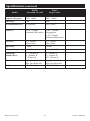
Specifications (continued)
Model
E55Wi
Surround On-wall
E56Ci
Large Center
Frequency Response:
65Hz – 20kHz
50Hz – 20kHz
Sensitivity:
87dB
87dB
Recommended Power:
50-130 Watts
50-175 Watts
Woofer(s):
(2) 5¼” (133mm)
(2) 6½” (254mm)
Aluminized Poly-matrix Polypropylene
(2) 5¼” (133mm)
Aluminized Poly-matrix
Tweeter(s):
(2) 1” (25mm)
Fabric Dome
(1) 1” (25mm)
Fabric Dome
Impedance:
6 Ohms
6 Ohms
Crossover Frequencies: 3,000 Hz
600 Hz, 3,000 Hz
Dimensions:
(Includes Base)
111/2” (292mm) W
12” (301mm) H
6” (152mm) D
31” (787mm) W
81/2” (216mm) H
101/2” (267mm) D
Cabinet:
High-gloss Red Burl or
High-gloss Black Ash
12 lbs. (5.44 Kg)
High-gloss Red Burl or
High-gloss Black Ash
28 lbs. (12.70 Kg)
Weight:
Impression Series
11
Owner’s Manual
Troubleshooting—Speakers
Situation:
Probable Cause:
No sound from
speakers.
Speaker wire not connected.
Make sure wire is connected at both
the speaker and the amplifier observing proper polarity.
No sound from
one speaker.
Speaker selector on amplifier is not on.
Activate proper selector on amplifier.
Balance control on receiver or pre-amp
is not centered.
Place balance control in the center.
Speaker wire not securely connected.
Check all connections at amplifier
and speakers.
Speakers are wired out of phase.
Check entire system for proper
polarity and make adjustments
as necessary.
Very little bass
and/or imaging.
Solution:
Troubleshooting—Subwoofer
Situation:
Probable Cause:
No sound from
subwoofer.
Amplifier is not connected to constant
power outlet.
Make certain the amplifier is plugged
into an unswitched AC power outlet.
Amplifier is not receiving an audio
signal from receiver or processor.
Make certain there is an audio signal
from receiver or processor.
Amplifier fuse might be blown.
Replace fuse (if fuse is not readily
accessible, consult with EMP Tek for
more information).
Crossover frequency is not
adjusted correctly.
Adjust the crossover frequency by
turning the crossover frequency
control clockwise until the desired
sound is obtained.
Performance
is less than
expected.
Impression Series
Solution:
12
Owner’s Manual
Warranty
Engineered Music Products “EMP Tek” warrants the Impression Series speakers
(the "Product") to be free from original manufacturing defects in materials and
workmanship for five (5) years, with subwoofer amplifiers covered for one (1) year
from the original date of purchase from an authorized EMP Tek dealer. This warranty
extends only to the original consumer purchaser. EMP Tek does not warrant goods
used in industrial applications. This warranty does not cover any expenses incurred
in any removal or re-installation of the product.
If the product should prove defective within the warranty period, contact EMP Tek
for a return authorization number prior to returning the product. Once the return
authorization number has been obtained ship the product back to EMP Tek, along with
the original sales invoice or other proof of purchase, which establishes eligibility for
warranty service and the return authorization number clearly marked of the outside
of the package, see www.emptek.com for detailed information on returns. EMP Tek
will, at its option, replace or repair the product free of charge and return the product
by prepaid delivery. This warranty does not apply to any product which has been
damaged, misused, altered, neglected or repaired by anyone other than an EMP Tek
authorized service facility.
Any implied warranties including fitness for use and merchantability are limited in
duration to the period of the express warranties set forth above, and no person is
authorized to assume for EMP Tek any other liability in connection with the sale of
the product. EMP Tek expressly disclaims liability for any incidental and consequential
damages caused by the product or the result of failure of this product. The remedies
provided under this warranty are exclusive and in lieu of all others.
This warranty gives specific legal rights. In addition, there may be other legal rights
arising from the sale of the product, which vary from state to state. Some states do not
allow the exclusion or limitation of incidental or consequential damages, so the above
limitation or exclusion may not apply in some areas.
Impression Series
13
Owner’s Manual
382 Marshall Way, Layton, Utah • USA • 84041
Phone: (801) 991-1308 • Fax: (801) 543-3300
www.emptek.com
It is EMP Tek policy to continuously incorporate improvements into products; all specifications are subject to change without notice.
Copyright © 2012 EMP Tek, LLC. All Rights Reserved. 01042012