1
ARM Developer Suite
Compilers and Libraries Guide
Copyright © 1999-2001 ARM Limited. All rights reserved.
Release Information
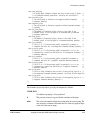
The following changes have been made to this book.
Change History
Date
Issue
Change
October 1999
A
Release 1.0
March 2000
B
Release 1.0.1
November 2000
C
Release 1.1
November 2001
D
Release 1.2
Proprietary Notice
Words and logos marked with ® or ™ are registered trademarks or trademarks owned by ARM Limited. Other
brands and names mentioned herein may be the trademarks of their respective owners.
Neither the whole nor any part of the information contained in, or the product described in, this document
may be adapted or reproduced in any material form except with the prior written permission of the copyright
holder.
The product described in this document is subject to continuous developments and improvements. All
particulars of the product and its use contained in this document are given by ARM in good faith. However,
all warranties implied or expressed, including but not limited to implied warranties of merchantability, or
fitness for purpose, are excluded.
This document is intended only to assist the reader in the use of the product. ARM Limited shall not be liable
for any loss or damage arising from the use of any information in this document, or any error or omission in
such information, or any incorrect use of the product.
ii
Copyright © 1999-2001 ARM Limited. All rights reserved.
ARM DUI 0067D