1
Operation Guide 3195
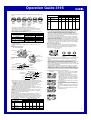
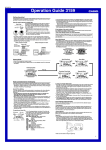
• Proper signal reception can be difficult or even impossible under the conditions listed
below.
Inside a
vehicle
Inside or
among
buildings
Near
household
appliances,
office
equipment,
or a mobile
phone
Among or
Near highNear a
construction tension power behind
mountains
site, airport, lines
or other
sources of
electrical
noise
• Signal reception normally is better at night than during the day.
• Time calibration signal reception takes from two to seven minutes, but in some
cases it can take as long as 14 minutes. Take care that you do not perform any
button operations or move the watch during this time.
• The time calibration signal the watch will attempt to pick up depends on its current
Home City code setting as shown below.
Home City Code
LIS, LON, MAD, PAR, ROM,
BER, STO, ATH, MOW*
HKG, BJS
TPE, SEL, TYO
HNL*, ANC*, YVR, LAX, YEA,
DEN, MEX, CHI, NYC, YHZ, YYT
Transmitter
Anthorn (England)
Mainflingen (Germany)
Shangqiu City (China)
Fukushima (Japan)
Fukuoka/Saga (Japan)
Fort Collins, Colorado
(the United States)
Frequency
60.0 kHz
77.5 kHz
68.5 kHz
40.0 kHz
60.0 kHz
60.0 kHz
* The areas covered by the HNL, ANC, and MOW city codes are quite far from the
time calibration signal transmitters, and so certain conditions may cause problems
with signal reception.
• Calibration signal reception is disabled while a countdown timer operation is in
progress.
Approximate Reception Ranges
Auto Receive Start Times
1
2
3
4
5
Standard Time and
1:00 am 2:00 am 3:00 am 4:00 am 5:00 am
Daylight Saving Time
Standard Time
Midnight 1:00 am 2:00 am 3:00 am 4:00 am
Your Home City
HKG
BJS
TPE
SEL
TYO
HNL
ANC
YVR
LAX
YEA
DEN
MEX
CHI
NYC
YHZ
YYT
Standard Time and
Midnight 1:00 am
Daylight Saving Time
2:00 am
3:00 am
4:00 am
6
5:00 am
5:00 am
*Next day
Note
• When a calibration time is reached, the watch will receive the calibration signal only
if it is in either the Timekeeping Mode or World Time Mode. Reception is not
performed if a calibration time is reached while you are configuring settings.
• Auto receive of the calibration signal is designed to be performed early in the
morning, while you sleep (provided that the Timekeeping Mode time is set correctly).
Before going to bed for the night, remove the watch from your wrist, and put it in a
location where it can receive the signal easily.
• The watch receives the calibration signal for two to seven minutes everyday when
the time in the Timekeeping Mode reaches a calibration time. Do not perform any
button operation within seven minutes before or after the calibration times. Doing so
can interfere with correct calibration.
• Remember that reception of the calibration signal depends on the current time in the
Timekeeping Mode. The receive operation will be performed whenever the display
shows any one of the calibration times, regardless of whether or not the displayed
time actually is the correct time.
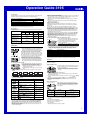
About the Signal Strength Indicator
The signal strength indicator shows the strength of the calibration signal being
received. For best reception, be sure to keep the watch in a location where signal
strength is strongest. The signal strength indicator is displayed while an auto or
manual receive operation is in progress.
U.K. and German Signals
RCVD indicator
1,500 kilometers
ll
ll l l
lll
l
2,000 miles
(3,000 kilometers)
500 kilometers
500 kilometers
Fukushima
Fukuoka/Saga
1,000 kilometers
1,000 kilometers
Signals are receivable in the Taiwan area when reception conditions are good.
China Signal
1,500 kilometers
Changchun
Beijing
Chengdu
l
Hong Kong
Shangqiu
• Signal reception may not be possible at the distances noted below during certain
times of the year or day. Radio interference also may cause problems with reception.
Mainflingen (Germany) or Anthorn (England) transmitters: 500 kilometers
(310 miles)
Fort Collins (United States) transmitter: 600 miles (1,000 kilometers)
Fukushima or Fukuoka/Saga (Japan) transmitters: 500 kilometers (310 miles)
Shangqiu (China) transmitter: 1,500 kilometers (910 miles)
• Even when the watch is within the reception range of the transmitter, signal
reception will be impossible if the signal is blocked by mountains or other geological
formations between the watch and signal source.
• Signal reception is affected by weather, atmospheric conditions, and seasonal
changes.
• See the information under “Signal Reception Troubleshooting” if you experience
problems with time calibration signal reception.
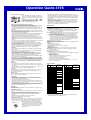
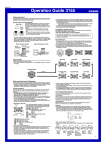
About Auto Receive
The watch receives the time calibration signal automatically up to six times a day
(five times a day for the Chinese calibration signal). When any auto receive is
successful, the remaining auto receive operations are not performed. The reception
schedule (calibration times) depends on your currently selected Home City, and
whether standard time or Daylight Saving Time is selected for your Home City.
Standard Time
Daylight Saving Time
Standard Time
Daylight Saving Time
1
1:00 am
2:00 am
2:00 am
3:00 am
Auto Receive Start Times
2
3
4
5
2:00 am 3:00 am 4:00 am 5:00 am
3:00 am 4:00 am 5:00 am Midnight*
3:00 am 4:00 am 5:00 am Midnight*
4:00 am 5:00 am Midnight* 1:00 am*
6
Midnight*
1:00 am*
1:00 am*
2:00 am*
Standard Time
Daylight Saving Time
MOW Standard Time
Daylight Saving Time
3:00 am
4:00 am
4:00 am
5:00 am
4:00 am
5:00 am
5:00 am
Midnight*
2:00 am*
3:00 am*
3:00 am*
4:00 am*
Your Home City
lll
Shanghai
ll
500 kilometers
Strong
(Level 3)
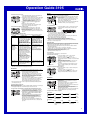
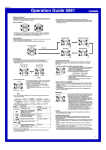
To perform manual receive
1. Enter the Timekeeping Mode.
Receiving
2. Hold down D for about two seconds until the RCVD
indicator starts to flash on the display. This indicates
l
ll l
that manual receive is in progress.
• Time calibration signal reception takes from two to
ll
seven minutes. Take care that you do not perform
any button operations or move the watch during this
time.
• If the receive operation is successful, the reception
Receive successful
date and time appear on the display, along with the
GET indicator.
3. After manual receive is complete, press D to return to
normal timekeeping.
• The watch also will return to normal timekeeping if you
do not perform any button operation for about one or
two minutes.
• If the latest reception fails but a previous reception was
Receive failed
successful, the RCVD indicator will be on the display.
ll
Fort Collins
Japan Signals
Weak
(Level 1)
ll l l
600 miles
(1,000 kilometers)
Signal strength indicator
• Even in an area where signal strength is strong, it takes about 10 seconds for signal
reception to stabilize enough for the signal strength indicator to indicate signal
strength.
• Use the signal strength indicator as a guide for checking signal strength and for
finding the best location for the watch during signal receive operations.
• Following reception of the time calibration signal and calibration of the watch’s time
setting, the RCVD indicator will remain on the display in all modes. The RCVD
indicator will not be displayed if signal reception was unsuccessful or after you adjust
the current time setting manually.
• The RCVD indicator is displayed only when the watch is able to receive both time
and date data successfully. It does not appear when only time data is received.
• The RCVD indicator indicates that at least one of the auto calibration signal receive
operations was successful. Note, however, that the RCVD indicator disappears from
the display each day when the first auto receive operation of the day is performed.
ll l
The Anthorn signal
is receivable within
this area.
LIS
LON
MAD
PAR
ROM
BER
STO
ATH
ll l
ll
U.S. Signal
500 kilometers
llll
ll
Mainflingen
Anthorn
5:00 am
Midnight*
Midnight*
1:00 am*
Midnight*
1:00 am*
1:00 am*
2:00 am*
1:00 am*
2:00 am*
2:00 am*
3:00 am*
Note
• To interrupt a receive operation and return to normal
timekeeping, press D.
If there was a previously
successful reception
If no reception was
successful
2