1
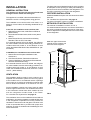
OPERATING INSTRUCTIONS
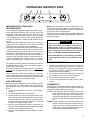
A
E D
C
B
OFF
AC
OFF ON
FUEL SELECTOR
FLAME
PUSH WHEN LIGHTING
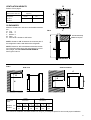
IMPORTANCE OF LEVELING A
REFRIGERATOR
In an absorption refrigerator system, ammonia is liquefied in the finned condenser coil at the top rear of the
refrigerator. The liquid ammonia then flows into the
evaporator (inside the freezer section) and is exposed
to a circulating flow of hydrogen gas, which causes the
ammonia to evaporate, creating a cold condition in the
freezer.
When starting this refrigerator for the very first time, the
cooling cycle may require up to four hours of running
time before the cooling unit is fully operational.
The tubing in the evaporator section is specifically sloped
to provide a continuous movement of liquid ammonia,
flowing downward by gravity through this section. If the
refrigerator is operated when it is not level and the vehicle is not moving, liquid ammonia will accumulate in
sections of the evaporator tubing. This will slow the circulation of hydrogen and ammonia gas, or in severe
cases, completely block it, resulting in a loss of cooling.
Any time the vehicle is parked for several hours with the
refrigerator operating, the vehicle should be leveled to
prevent this loss of cooling.
The vehicle needs to be leveled only so it is comfortable
to live in (no noticeable sloping of floor or walls).
When the vehicle is moving, the leveling is not critical,
as the rolling and pitching movement of the vehicle will
pass to either side of level, keeping the liquid ammonia
from accumulating in the evaporator tubing.
GAS OPERATION
Before starting the refrigerator, check that all the manual
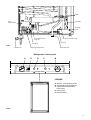
gas valves are in the ON position. DO NOT forget the
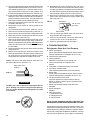
manual shutoff valve on the rear of the refrigerator see
FIG. 1.
1. To start the refrigerator, turn knob A to the “GAS”
position.
2. Turn the thermostat knob B to position 4.
3. Push the button C in until it reaches the bottom - and
hold, push the button D for the piezo igniter several
times to light the burner. This can be observed on
the flame indicator E. When the flame is on, the red
indicator is in the green field, (ON).
4. After the gas is lit keep the button C pressed for 10
seconds. Release the button and check that the RED
indicator is in the GREEN field, (ON).
5. To shut off the refrigerator turn the knob A to “OFF”
position.
THERMOSTAT
NOTE: After changing an LP tank, or after a long shutoff period, the gas line is likely to be filled with air. You
may have to repeat the lighting procedure several times
to purge the air out of the gas lines.
As soon as the necessary cold temperature inside the
cabinet has been reached, adjust the thermostat knob
to required setting.
! WARNING
Most LP gas appliances used in recreational vehicles are vented to the outside of the vehicle.
When parked close to a gasoline pump, it is
posible that the gasoline fumes could enter this
type of appliance and ignite from the burner
flame, CAUSING A FIRE OR AN EXPLOSION.
FOR YOUR SAFETY, when refueling, shut off all
LP gas appliances which are vented to the outside.
ELECTRIC OPERATION
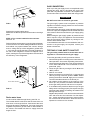
1. Check to be sure that the power cord is properly connected to the power supply. (See FIG. 11). If the refrigerator is equipped for 12 volt DC operation, the
tow vehicle or caravan engine should be running to
prevent discharging the battery.
2. Turn the knob A to position marked “AC” for 120 volt
AC operation or “DC” for 12 volt DC operation.
3. Turn the thermostat knob B to position 4.
4. To shut off the refrigerator turn the knob A to “OFF”
position.
THERMOSTAT
The refrigerator is equipped with a thermostat that can
be adjusted by turning the knob B to different setting to
maintain the desired cabinet temperature.
At OFF In gas operation, the thermostat closes its main
valve and the burner runs continuously at the
bypass rate, just enough to keep the burner lit.
In electrical operation, the contacts in the thermostat are open and the heating elements are
off.
At MAX In gas operation, the thermostat allows the
burner to remain on high flame continuously. In
electric operation, the heating element is “ON”
continuously. Lowest cabinet and freezer temperatures are obtained at this setting.
9