1
Transarc 250Si, 300Si
Description
Possible Cause
3 A gap is left by failure A Welding current is too low.
of the weld metal to fill B Electrode too large for joint.
the root of the weld.
C Insufficient gap.
D Incorrect sequence.
Remedy
A Increase welding current
B Use smaller diameter
electrode.
C Allow wider gap.
D Use correct build-up sequence.
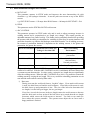
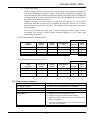
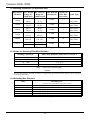
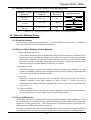
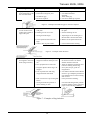
Figure 5 – Example of insufficient gap or incorrect sequence
4 Portions of the weld
run do not fuse to the
surface of the metal or
edge of the joint.
A Small electrodes used on heavy
cold plate.
B Welding current is too low.
A Use larger electrodes and pre-heat
the plate.
B Increase welding current
C Wrong electrode angle.
C Adjust angle so the welding arc is
directed more into the base metal
D Reduce travel speed of electrode
D Travel speed of electrode is too
high.
E Scale or dirt on joint surface.
E Clean surface before welding.
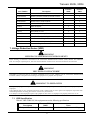
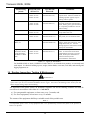
Figure 6 – Example of lack of fusion
5 Non-metallic particles A Non-metallic particles may be
are trapped in the weld
trapped in undercut from previous
metal (slag inclusion).
run.
B Joint preparation too restricted.
C
D
E
F
A If bad undercut is present, clean slag
out and cover with a run from a
smaller diameter electrode.
B Allow for adequate penetration and
room for cleaning out the slag.
Irregular deposits allow slag to be C If very bad, chip or grind out
trapped.
irregularities.
Lack of penetration with slag
D Use smaller electrode with sufficient
trapped beneath weld bead.
current to give adequate penetration.
Use suitable tools to remove all slag
from corners.
Rust or mill scale is preventing full E Clean joint before welding.
fusion.
Wrong electrode for position in
F Use electrodes designed for position
which welding is done.
in which welding is done, otherwise
proper control of slag is difficult.
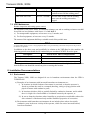
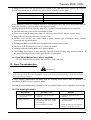
Figure 7 – Examples of slag inclusion
29