1
Reactive Loads
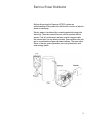
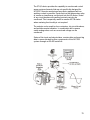
Circuits with inductive or capacitive components are said to be
reactive. Most distribution systems have various resistive and
reactive circuits. The amount of resistance and reactance varies,
depending on the connected loads.
Reactance
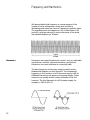
Just as resistance is opposition to current flow in a resistive
circuit, reactance is opposition to current flow in a reactive
circuit. It should be noted, however, that where frequency has
no effect on resistance, it does effect reactance. An increase in
applied frequency will cause a corresponding increase in
inductive reactance and a decrease in capacitive reactance.
Energy in Reactive Circuits
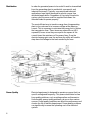
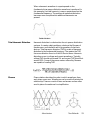
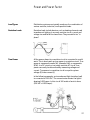
Energy in a reactive circuit does not produce work. This energy
is used to charge a capacitor or produce a magnetic field around
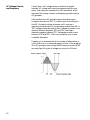
the coil of an inductor. Current in an AC circuit rises to peak
values (positive and negative) and diminishes to zero many
times a second. During the time current is rising to a peak
value, energy is stored in an inductor in the form of a magnetic
field or as an electrical charge in the plates of a capacitor. This
energy is returned to the system when the magnetic field
collapses or when the capacitor is discharged.
29