1
Features Common to Most Warwick Basses
Although each model of Warwick bass is very unique, there are some features that are consistent throughout the entire line. By
understanding the benefits of these common elements, you will better understand your own bass.
Wenge and Ovangkol Necks
When people comment on the unique sound of Warwick basses, they invariably use the word “growl”. One reason our basses
have such a special sound is because of the wood used to make all of our necks. Wenge (pronounced either “win-gay” or “wengee”) is a very open-grained, dense wood that offers superior stability and outstanding tonal characteristics. Ovangkol has many
of the same tonal traits as wenge, but offers a unique cosmetic look in a closed grain, stable neck wood. The fingerboards are
almost always wenge unless the instrument is fretless, in which case Warwick uses ebony. We have heard countless stories from
Warwick players about how they have toured through various countries and climates without having to make significant adjustments to their necks. If you have previously owned a Warwick bass with a wenge or ovangkol neck with a wenge fingerboard, then
you know how special these woods are. If this is your first Warwick, then you are in for a pleasant surprise!
Bell Brass Frets
All Warwick fretted basses come with frets that are made from a special
silver/bronze alloy. This material is commonly known as “bell brass” because it is
the same material that the bell makers in Europe have been using for many years.
Bell brass is an extremely resonant metal that is perfectly suited for use as frets.
Warwick frets are perfect for musical use with one slight exception. Like any brass
product, these frets will tarnish. The tarnish doesn’t hurt anything, but if you want
to keep them shiny, steelwool and some elbow grease do a great job.
The Just-A-Nut
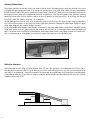
All Warwick basses come with either a brass Just-A-Nut I or the Wilferite Just-A-Nut II. Both nuts are fully adjustable for easy
playing in the first position. The Just-A-Nut II represents a major improvement in engineering over the Just-A-Nut I. This new
design allows you to make string height adjustments at the nut without taking the strings off. The two allen screws that are inset
on the top of the nut allow you to easily change the nut height. By turning the screws clockwise, you raise the nut. Turning the
screws counterclockwise will lower the nut. Now you can experiment with different string gauges without having to go through
the hassle or expense of shimming or filing your nut. (See photo below.)
Height
Adjusting
Allen
Screws
The Fully Adjustable Bridge:
Since every player is unique, basses need to be as flexible as possible to accommodate each bassist’s needs. The Warwick bridge
(see photo below) was designed to give you every possible adjustment, without sacrificing its durability and function. With a
simple turn of an allen wrench or phillips screw driver, you can change the overall bridge height, individual string height and contour, and set the individual string intonation. Warwick provides the proper 1.5 mm and 2.5mm wrenches for the allen screws with
every bass. The intonation screws require a fresh #1 phillips head screwdriver with a small shaft. What makes this bridge even
more unique is that you can easily change the string spacing of your Warwick bass! You can do this by loosening the allen set
screw that locks the saddle insert into the saddle. Once you have done that, you can then slide the insert back and forth in the
saddle. Be sure to lock the set screw down after you have found the desired string spacing to ensure that your adjustments you
have made stay put.
Saddle
Height
Adjustment
Bridge
Height
Adjustment
6
Bridge
Locking
Screw
Individual
String
Intonation
Adjustment
Saddle
Locking
Screw