1
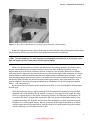
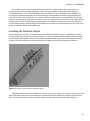
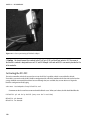
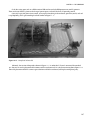
CHAPTER 11 The Weather Balloon You may be familiar with weather balloons. Sometimes up to 20-feet in diameter, they can be filled with helium, given a small scientific payload, and ascend to the upper limits of the atmosphere, taking and recording various sensor readings as they go. Then, when the outside pressure becomes significantly less than the interior pressure of the balloon, they burst, and the payload falls back to earth with the assistance of a small parachute. The group that launched the balloon tracks down the fallen package and retrieves the data. In this way, scientists and hobbyists can learn a great deal about the upper reaches of the atmosphere. Although operating the radio-controlled airplane with a Raspberry Pi in the previous chapter was cool, it was also somewhat tame in that we logged its position and uploaded its path data to Google Earth. The concept behind this project, building a weather balloon, is very simple but more advanced. We’ll inflate and launch a small weather balloon capable of sending the Raspberry Pi to at least 30,000 feet. We’ll then program the Pi to take a picture every so often, giving us a pictorial record of our flight and use a small GPS unit to log our Pi’s trip. But we won’t stop there because that’s kind of boring, and it’s been done by many different hobbyists and professionals. In addition, we’ll get an update, in real time, as to what the balloon is doing—its latitude, longitude, and even altitude—by programming the Pi to record itself speaking its coordinates every 15 seconds or so. Then we’ll broadcast that recording to a radio on the ground. All we need to do is tune our small FM radio to a pre-assigned frequency, and we’ll be able to hear our balloon talking to us, giving us live updates on its condition. Let’s go shopping for parts! ■ Caution In the United States, FAA regulations require you to notify the agency 6 to 24 hours before your launch with relevant information, such as the time and place of the launch, predicted altitude, balloon description, and forecast of the landing location. The FAA also requires you to keep track of the balloon’s location and have the ability to update the FAA with that information should it be required. Regulations differ for moored versus free balloons; for more information, see the full regulations at http://www.gpo.gov/fdsys/pkg/CFR-2012-title14-vol2/pdf/CFR-2012-title14-vol2-part101.pdf. A Shopping List of Parts Like the RC plane, this is one of the more expensive projects in the book, if only because weather balloons can be sort of expensive, and you’ll need to purchase or rent a tank of helium from a party supply store or welding supply house. Here’s what you’ll need: • Raspberry Pi with camera board • LiPo battery and 5V regulator to power the Pi • Latex weather balloon 6-7 foot diameter • GPS receiver—(https://www.adafruit.com/products/746) 161