1
and addresses of internal fields.
2. Precise reasoning about call-free and loop-free fragments of code inside a procedure using the accurate
memory model and the B OOGIE [5] verifier.
3. Scalable checking of constraints using state-of-the-art
Satisfiability Modulo Theories (SMT) solver Z3 [10].
4. An annotation assistant for interprocedural inference
of simple contracts based on a variant of the Houdini
algorithm [14].
5. Prudent use of explicit assumptions about type-safety
and type invariants about data structure shapes. These
assumptions are required to verify high-level properties with low false alarm, but verifying them might require significant annotation overhead.
We demonstrate the feasibility of the approach by applying it on a core component C OMP of the Windows kernel
— the name of the module and the code fragments have
been modified for proprietary reasons. The code base has
more than 300,000 lines of C code and has evolved over
two decades. The module has over 1500 procedures, with
some of the procedures being a few thousand lines long —
a result of the various feature additions over successive versions.
For this component, we specified and checked properties
related to the synchronization protocol on its main heap allocated data structures. The properties include checking for
resource leaks, improper lock usage, data races and teardown races. The highlights of the effort were:
1. H AVOC found 45 bugs in the C OMP module that were
confirmed by the developers and many of them have
been fixed at the time of writing. Most of these bugs
appear along error recovery paths indicating the mature and well-tested nature of the code and signifying
the ability of H AVOC to detect subtle corner cases.
2. The checking required modest annotation effort of
about 250 annotations for specifying the properties
and operating system model, 600 annotations for procedure contracts. An annotation assistant generated
around 3000 simple annotations, a bulk of the required
annotation effort, to relieve the need for annotating
such a large code base. This corresponds to roughly
one manual annotation per 500 lines of code, or one
per 2.5 procedures.
3. The tool currently reports 125 warnings, including the
45 confirmed bugs, when the checker runs on the annotated code base. The extra warnings can be minimized
at the cost of more annotations.
The rest of the paper is organized as follows: In Section 2, we illustrate our approach with a simplified problem
of data race checking from C OMP; we describe our annotations and the checker in Section 3 and the annotation assistant in Section 4. We describe the details of our case study
on C OMP in Section 5, discuss related work in Section 6,
and finally conclude in Section 7.
2 Illustrative example
In this section, we illustrate the challenges involved in
checking properties of low-level systems software, with an
example of data-race checking on the main heap-allocated
data structures in C OMP. These data structures are fairly
representative of low-level systems software.
Our example demonstrates that modular verification of
data-race freedom on C OMP code requires (i) annotations involving pointer arithmetic, aliasing, and conditional
specifications, (ii) loop invariants to deal with unbounded
sources of data (e.g., lists), and (iii) explicitly assumed type
invariants for trading off soundness for scalability.
We first describe high-level details of the data structure
and the synchronization protocol, some procedures manipulating these structures, and finally the annotations to check
the absence of data races.
2.1
Example
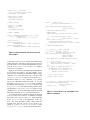
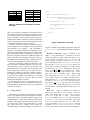
Figure 1 describes a few types for the heap-allocated
data structures in C OMP. The type LIST ENTRY is the
generic type for (circular) doubly-linked lists in most of
Windows source code. It contains two fields Flink and
Blink to obtain the forward and backward successors of a
LIST ENTRY node respectively in a linked list. An object
of type NODEA contains a list of children objects of type
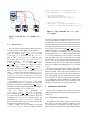
NODEB using the field NodeBQueue. Figure 3 describes
the shape of the children list for any NODEA object. Each
child NODEB node also maintains a pointers to its parent
NODEA object with the ParentA field.
The macro CONTAINING RECORD (defined in Figure 1) takes a pointer addr to an internal field field
of a structure of type type and returns the pointer to the
enclosing structure by performing pointer arithmetic. The
helper macros ENCL NODEA and ENCL NODEB uses the
CONTAINING RECORD macro to obtain pointers to enclosing NODEA and NODEB structures respectively, given
a pointer to their respective LIST ENTRY fields. The
CONTAINING RECORD macro is frequently used in systems software and is a primary source of pointer arithmetic.
Since these objects can be accessed from multiple
threads, one needs a synchronization mechanism to ensure
the absence of data-races on the fields of these objects.
Each NODEA structure maintains a field Resource, which