1
2.6
Change of symbol
65
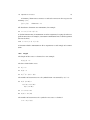
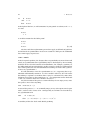
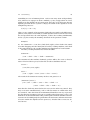
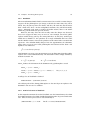
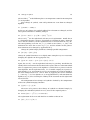
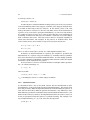
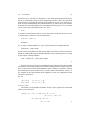
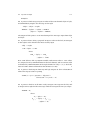
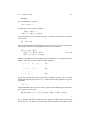
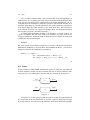
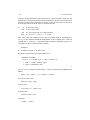
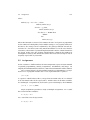
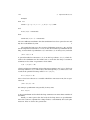
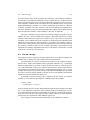
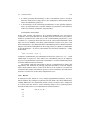
(the need for f −1 in the following laws is an important reason for insisting that
f is an injection).
After change of symbol, STOP still performs no event from its changed
alphabet
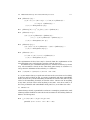
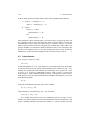
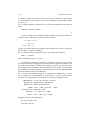
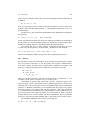
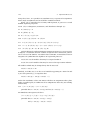
L1 f (STOPA ) = STOPf (A)
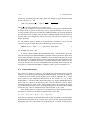
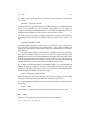
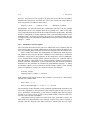
In the case of a choice, the symbols offered for selection are changed, and the
subsequent behaviour is similarly changed
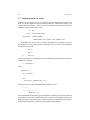
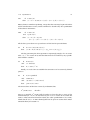
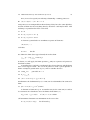
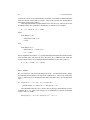
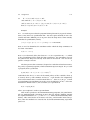
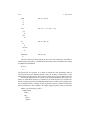
L2 f (x : B → P (x)) = (y : f (B) → f (P (f −1 (y))))
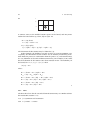
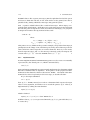
The use of f −1 on the right-hand side may need explanation. Recall that P
is a function delivering a process depending on selection of some x from the
set B. But the variable y on the right-hand side is selected from the set f (B).
The corresponding event for P is f −1 (y), which is in B (since y ∈ f (B)). The
behaviour of P after this event is P (f −1 (y)), and the actions of this process
must continue to be changed by application of f .
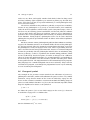
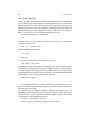
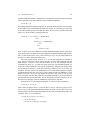
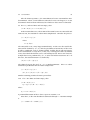
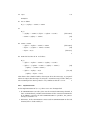
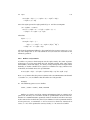
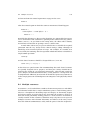
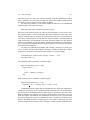
Change of symbol simply distributes through parallel composition
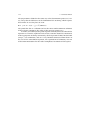
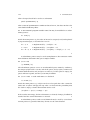
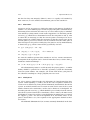
L3 f (P || Q ) = f (P ) || f (Q )
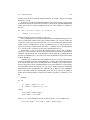
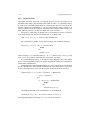
Change of symbol distributes in a slightly more complex way over recursion,
changing the alphabet in the appropriate way
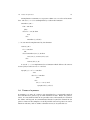
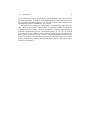
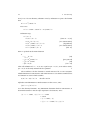
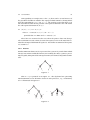
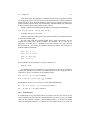
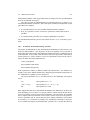
L4 f (µ X : A • F (X )) = (µ Y : f (A) • f (F (f −1 (Y ))))
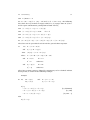
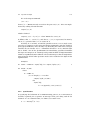
Again, the use of f −1 on the right-hand side may be puzzling. Recall that the
validity of the recursion on the left-hand side requires that F is a function which
takes as argument a process with alphabet A, and delivers a process with the
same alphabet. On the right-hand side, Y is a variable ranging over processes
with alphabet f (A), and cannot be used as an argument to F until its alphabet
has been changed back to A. This is done by applying the inverse function
f −1 . Now F (f −1 (Y )) has alphabet A, so an application of f will transform the
alphabet to f (A), thus ensuring the validity of the recursion on the right-hand
side of the law.
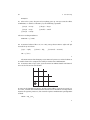
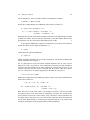
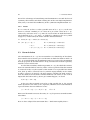
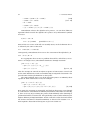
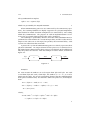
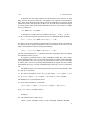
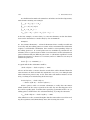
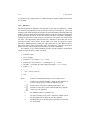
The composition of two changes of symbol is defined by the composition
of the two symbol-changing functions
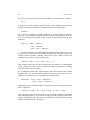
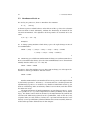
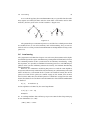
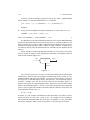
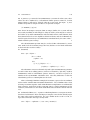
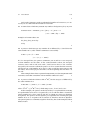
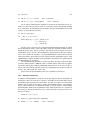
L5 f (g(P )) = (f ◦ g) (P )
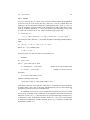
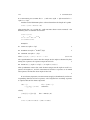
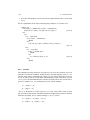
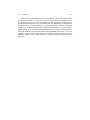
The traces of a process after change of symbol are obtained simply by
changing the individual symbols in every trace of the original process
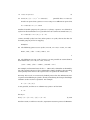
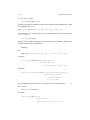
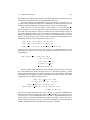
L6 traces(f (P )) = { f ∗ (s) | s ∈ traces(P ) }
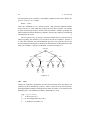
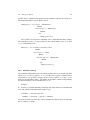
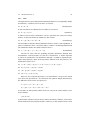
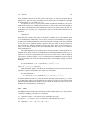
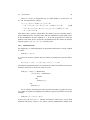
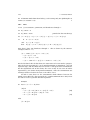
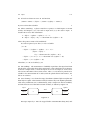
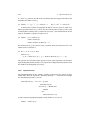
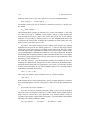
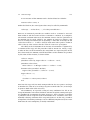
The explanation of the next and final law is similar to that of L6
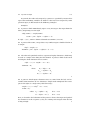
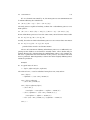
L7 f (P ) / f ∗ (s) = f (P / s)