1
5 Portable FES System
71
empty box
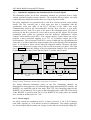
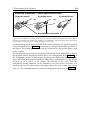
Time line:
Generated stimulation sequence:
Primitives
3.0 s
Time [s]
12.4 s
15.0 s
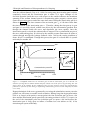
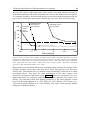
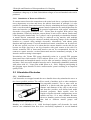
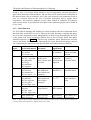
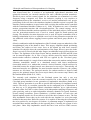
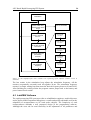
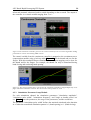
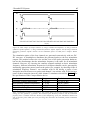
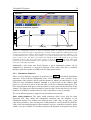
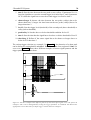
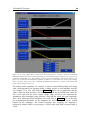
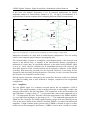
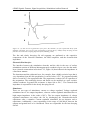
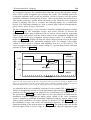
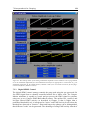
Figure 31: A stimulation sequence (a train of stimulation pulses) is composed by placing function
primitives into a time line using a “drag-and-drop” technique. In this example the stimulation pulse train
is composed using three primitives. The first primitive increases from pulse to pulse the width for 3 s, the
second stimulates with a constant pulse width for 9.4 s, and the third decreases the pulse width from
pulse to pulse in 2.6 s. The above curve depicts the stimulation pulse width profile of the generated
stimulation sequence. The single pulses have a shape as shown in Figure 29. The pulse width ramp
primitives (the first and third primitive) can be defined by a 16 point curve of any shape. They are defined
in the pulse width (PW) sub-window.
Additionally, with insert and delete buttons a given stimulation pattern can be
lengthened or shortened. A copy/paste function of the whole time line is available
through a pull-down menu accessible with the right mouse button.
5.4.3 Stimulation Primitives
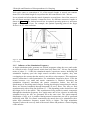
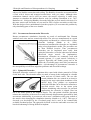
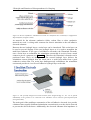
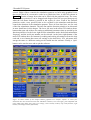
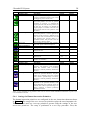
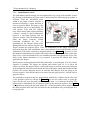
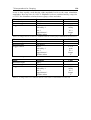
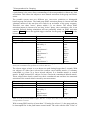
There are seven different categories of primitives (see Table 5) to build the stimulation
sequences. Three different background colors of the primitive icons visualize to the
programmer if the primitive affects only the channel in which it is placed (blue), or if it
affects all four stimulation channels although it is placed only in one channel (dark
green), or if it has to be places in the time lines of all active channels (light green). The
blue colored and the dark green colored primitives can be placed in the time line of any
channel. The light green colored primitives must be place in the time lines of all active
channels. A channel is considered active if the end primitive is not yet reached.
The seven different primitive categories are described in more detail:
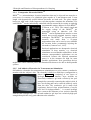
Pulse width primitives: The pulse width primitives (blue icons) play the most
important role. They define the stimulation intensities and the duration of the
stimulation patterns. Per channel two different pulse width ramp up and pulse width
ramp down primitives, four constant pulse width primitives, a delay primitive (holds the
value of the last stimulated pulse width constant), and a no-stimulation primitive (pulse
width = 0 µs) are available. For all these primitives the duration of the pulse train can be