1
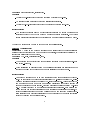
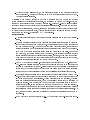
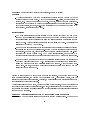
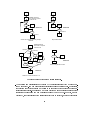
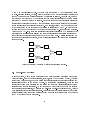
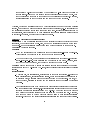
- By using implementation strategies for the deferred choice pattern (instead of an explicit
XOR-split) the order does not need to be xed before the execution starts, i.e. the implicit
XOR-split allows for on-the-y selection of the order. Unfortunately, the resulting model
typically has a \spaghetti-like" structure. This solution is illustrated by Workow C of
Figure 13.
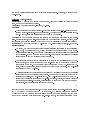
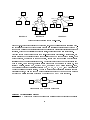
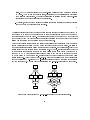
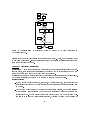
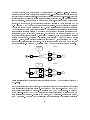
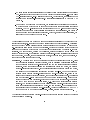
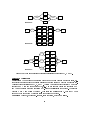
- For workow models based on Petri nets, the interleaving of activities can be enforced
by adding a place which is both an input and output place of all potentially concurrent
activities. The AND-split adds a token to this place and the AND-join removes the token.
It is easy to see that such a place realizes the required \mutual exclusion". See Figure 14
for an example where this construct is applied. Note that, unlike the other solutions, the
structure of the model is not compromised.
2
The expressive power of many workow management systems is restricted by the fact that they
abstract from states, i.e. the state of a workow instance is not modeled explicitly. The solution
shown in Figure 14 is only possible because mutual exclusion can be enforced by place mutex
(i.e. state information shared among the activities). Pattern 16 (Deferred choice) is another
example of a construct which is hard to handle if one abstracts from the states in-between
activities. The next pattern, Pattern 18 (Milestone), allows for testing whether a case has
reached a certain phase. By explicitly modeling the states in-between activities this pattern is
easy to support. However, if one abstracts from states, then it is hard, if not impossible, to
test whether a case is in a specic phase.
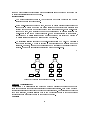
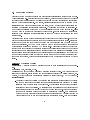
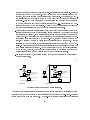
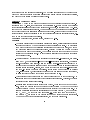
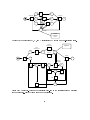
Example 2.1 Consider the workow process for handling complaints (see Figure 15). First
the complaint is registered (activity register), then in parallel a questionnaire is sent to
the complainant (activity send questionnaire) and the complaint is evaluated (activity
evaluate). If the complainant returns the questionnaire within two weeks, the activity
process questionnaire is executed. If the questionnaire is not returned within two weeks,
the result of the questionnaire is discarded (activity time out). Note that there is a
deferred choice between process questionnaire and time out (Pattern 16). Based on the
result of the evaluation (activity evaluate), the complaint is processed or not. Transitions
skip and processing needed have been added to model the explicit choice. Note that the
choice between skip and processing needed is not oered to the environment. This choice
is made by the workow management system, e.g., based on an attribute set in activity
evaluate. The actual processing of the complaint (activity process complaint) is delayed
until the questionnaire is processed or a time-out has occurred. The processing of the
complaint is checked via activity check processing. Again two transitions (OK and NOK)
have been added to model the explicit choice. Finally, activity archive is executed.
2
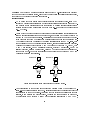
The construct involving activity process complaint which is only enabled if place c5 contains
a token is called a milestone.
32