1
Attempting to run another program via the STOP command generates a clearer error message
notifying the user that this is not an enabled function under MS-DOS. An unimplemented
USERMODEL now also generates a more clear message to that effect. Finally, the initial
messages displayed within the first 60 days of their existence do a clear screen first for easier
readability. This, like the initial copyright notice, uses the ANSI sequences which require the use
of ANSI.SYS or an equivalent in CONFIG.SYS.
:PRETRANSYT V1 L4.6 03JUN87
>Improved Greeting Screen; Messages Displayed for 60 Days.
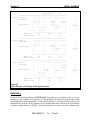
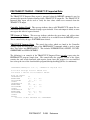
The screen that greets you when you first run the program has been reorganized and enhanced.
The program now clears the screen and prints the program's name, version and level, and
copyright information at the top. Below this is a brief discussion of some of the important
concepts of running the program. The whole greeting screen is enclosed in boxes formed with
the IBM extended-ASCII character set.
In addition to the above, the program will now display a summary of all changes included in the
current version of the program for a period of 60 days after the version date of the program. This
can be reproduced at any time while running the program by executing the MESSAGES
command with a parameter of 1. And, of course, details about these and past changes can also be
displayed with the MESSAGES command using a parameter of 2 or 3.
>Sub-directories in Path Command Now Searched for Support and Data Files.
The MS-DOS PATH command searches a set of specified sub-directories for a program to run if
it cannot find the program in the current logged sub-directory. However, it will not search for
support files or data files. A new TEAPAC feature is the ability to search all sub-directories
specified in the PATH command for support files and data files. This feature is supported only
in DOS 3.x, however. It is compatible with the DOS APPEND program.
>Data File Format Changed.
Data files that are written to disk now use a new format: each record consists of 128 bytes,
delimited by a CR LF. (Only the first 80 characters may contain data, as before). The old format
may still be read directly and programs still written for the old format may use data files written
with the new format directly.
Error messages caused by an end-of-file or input/output error have also been enhanced.
>Headings Command Improved.
PRETRANSYT
H-319
Reference