1
Radoop Documentation, Release 2.1
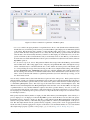
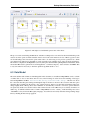
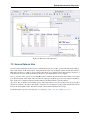
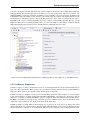
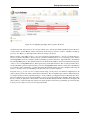
Figure 6.3: Examine the meta data during design time.
6.4.4 Modeling
Besides the ETL operators, Radoop also contains operators for predictive analytics. All the modeling algorithms in
this group use the MapReduce paradigm to take full advantage of the parallelism of the distributed system. They are
ready to scale with your large volume of data on the cluster. This section only lists the operators, Radoop’s predictive
analytics features are covered in Advanced Radoop Processes.
The operators in this group deals with exactly the same type of model objects as core RapidMiner operators do.
Thus, a model output of a Radoop operator can be connected to the input port of a core RapidMiner operator and
vice versa. Models trained on the cluster can be visualized exactly the same way as models trained on a data set in
the operative memory. The same compatibility is true for Performance Vector objects that hold performance criteria
values calculated to review and compare model performance. These objects can also be easily shared easily between
operators that operate on the cluster and those that use the operative memory.
Clustering
This group contains three different clustering operators. All of them expect a HadoopExampleSet object on their input,
and deliver the same HadoopExampleSet on their output with a new column added which contains the result of the
clustering algorithms: clusters represented by nominal identifiers (cluster_0, cluster_1, cluster_2, etc.). The values
indentify the rows that belong to the same cluster.
The input data must have an id attribute which uniquely identifies the rows. The attribute must have the “Id” role (use
Set Role operator). If there is no id column on the data set, you can use the Radoop operator Generate ID for creating
one.
6.4. Radoop Operators
25



















































![[U7.00.01] Opérateur EXEC_LOGICIEL](http://vs1.manualzilla.com/store/data/006358421_1-4c52b89a0a71b084c3a2df1a9b9adfcc-150x150.png)