1
The pdfTEX user manual
• For LATEX users, Sebastian Rahtz’ hyperref package has substantial support for pdfTEX, and provides
access to most of its features. In the simplest case, the user merely needs to load hyperref with
a pdftex option, and all cross--references will be converted to pdf hypertext links. pdf output is
automatically selected, compression is turned on, and the page size is set up correctly. Bookmarks
are created to match the table of contents.
• The standard LATEX graphics and color packages have pdftex options, which allow use of normal
color, text rotation, and graphics inclusion commands.
• The ConTEXt macro package by Hans Hagen ([email protected]) has very full support for pdfTEX in its
generalized hypertext features. Support for pdfTEX is implemented as a special driver, and is invoked
by saying \setupoutput[pdftex] or feeding TEXexec with the --pdf option.
• Hypertexted pdf from texinfo documents can be created with pdftexinfo.tex, which is a slight
modification of the standard texinfo macros. This file is part of the pdfTEX distribution.
• A similar modification of webmac.tex, called pdfwebmac.tex, allows production of hypertext’d pdf
versions of programs written in web. This is also part of the pdfTEX distribution.
Some nice samples of pdfTEX output can be found on the tug web server, at http://www.tug.org
/applications/pdftex and http://www.ntg.nl/context.
5 Setting up fonts
pdfTEX can work with Type 1 and TrueType fonts, but a source must be available for all fonts used
in the document, except for the 14 base fonts supplied by Acrobat Reader (Times, Helvetica, Courier,
Symbol and Dingbats). It is possible to use METAFONT--generated fonts in pdfTEX— but it is strongly
recommended not to use METAFONT--fonts if an equivalent is available in Type 1 or TrueType format,
if only because bitmap Type 3 fonts render very poorly in Acrobat Reader. Given the free availability
of Type 1 versions of all the Computer Modern fonts, and the ability to use standard PostScript fonts,
most TEX users should be able to experiment with pdfTEX.
5.1
Map files
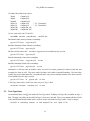
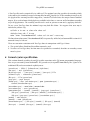
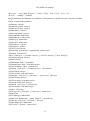
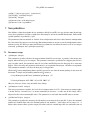
pdfTEX reads the map files, specified in the configuration file, see section 3.6, in which reencoding and
partial downloading for each font are specified. Every font needed must be listed, each on a separate
line, except pk fonts. The syntax of each line is similar to dvips map files 3 and can contain up to the
following (some are optional) fields: texname, basename, fontflags, fontfile, encodingfile and special.
The only mandatory is texname and must be the first field. The rest is optional, but if basename is
given, it must be the second field. Similarly if fontflags is given it must be the third field (if basename
is present) or the second field (if basename is left out). It is possible to mix the positions of fontfile,
encodingfile and special, however the first three fields must be given in fixed order.
texname sets the name of the tfm file. This name must be given for each font.
3
dvips map files can be used with pdfTEX without problems.
11