1
ABSTRACT
Reverse osmosis (RO) desalination is increasingly used to produce potable water
throughout the world. Despite their promising abilities, membrane filtration processes are
limited by fouling. Fouling is a broad term for organics, inorganics, colloids and
organisms that interact physically, chemically, or biologically with the membrane
surface, resulting in reduced flux and shortened membrane lifespan. There is potential to
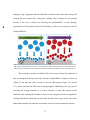
create a snakeskin-like barrier between the membrane and foulants by electrostatically
binding a coating material to the membrane that can be released by pH manipulation,
removing foulants in the process. The feasibility of using functionalized nanoparticles as
removable adsorptive coatings on RO membranes was evaluated in this study. Several
inorganic-polymer composite nanoparticles (NPs) were examined in this study, including
titanium dioxide coupled with polydiallyldimethylammonium chloride (polyDADMAC)
to impart a positive charge [TiO2(+)], titanium dioxide incorporated with polyacrylate to
impart a negative charge [TiO2(-)] and silver incorporated with polyacrylate, again to
incorporate a negative charge [Ag(-)]. PolyDADMAC was used as a positively charged
binding layer atop the negatively charged membrane surface to adsorb negatively charged
nanoparticles.
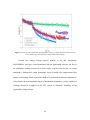
A series of concentration experiments was performed for each NP to find the
lowest effective concentration for self-assembled coatings. The optimal concentration
was then used in a series of kinetic experiments to determine the time required for
coatings to assemble. Coating removal experiments were performed over a range of high
and low pH values, with attention to indications of chemical alterations to the virgin
ii