1
3
Chapter 3
MPC Driver Programming
We assume that you have installed either a Linux tool chain or Microsoft eVC++ 4.0 on your
development workstation. Linux drivers are in the format of executable shared objects, and
WinCE drivers are in the format of dynamic-link libraries. Note that the MPC engine does not
support computers that use the µcLinux operating system. This is because µcLinux does not
support shared objects.
The MPC engine is written in C, and for this reason, the drivers you create must also be written in
C. After compiling the drivers, the resulting driver files will be in the form of shared objects or
dynamic link libraries.
Note that your drivers use the same memory context as the MPC engine. For this reason, it is your
responsibility to use a “clean design” for your drivers. If your driver design is flawed, then code
violations of your drivers could cause a core dump of the MPC engine.
There is no need to use binary APIs when programming your drivers, but developers need to
follow the correct function definitions for a given x_driver.h file. Developers can make a copy of
this file, and then save it in a location accessible by your program.
x_driver.h File
This file regulates the relative data addresses used in the engine and your drivers. It must be
included when you compile your codes.
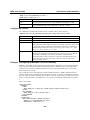
#ifndef _X_DRV_H
#define _X_DRV_H
#define MPC_DRV_OK
#define MPC_DRV_FAIL
0
0xffffffff
typedef struct _DRVRPKT
{
char
*port;
/* specify the port # defined in the configuration file */
unsigned int hndl;
/* the handle of a client connection, may be NULL */
char*
packet_data;
/* data to be consumed and forwarded */
int
packet_size; /* bytes in packet_data */
int
packet_consumed; /* bytes consumed in packet_data after the execution of a driver
function*/
} DRVRPKT;
typedef void (*xxx_driver_timer) (void *private_data, DRVRPKT *pktA, DRVRPKT *pktB, unsigned int
*timer_interval);
typedef int
(*xxx_driver_exec) (void *private_data, DRVRPKT *pktX);
typedef void* (*xxx_driver_open) (char *portA, char *portB, int *rtn);
typedef void (*xxx_driver_close) (void *private_data);
#endif