1
1. Preparing for ActiGraph Data Collection
←
A. Equipment
There are several different ActiGraph models that are used in our studies. Below is a brief
description of each. For NQLS-Adult, NQLS-Senior, we used both the 7164 and 71256 models.
Within IPEN, a variety of models have been used. We are conducting studies to determine if a
correction factor is necessary to allow us to use different Actigraph models in a pooled dataset. So
far, the evidence from laboratory studies suggest that the different models are comparable when
Freedson (1998) MVPA cut points are applied (John 2010, Corder 2007); however it has been
suggested that there is less comparability on the lower end of the spectrum (Kozey 2010, Rothney
2008). Our studies in free living adults and youth are showing that the single axis data are
comparable between the new models (i.e. GT1M vs GT3X/GT3X+) but are not comparable between
the old (7164) and new models in sedentary, light or moderate intensity (<100 cpm for sedentary and
Freedson ‘98 for light and moderate). However, when the Low Frequency Extension is applied to the
data from the GT3X+, the differences are no longer significant (papers in process). Our studies
indicate the ActiTrainer by ActiGraph is comparable to the new models at all intensities. We do not
yet know the compatibility of the Actical (Respironics/MiniMitter) with these Actigraph models, but
our colleagues in New Zealand are conducting analyses to help determine this.
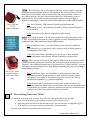
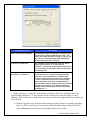
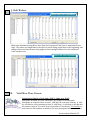
7164 and 71256
(later models came in
red and blue)
7164: This is the oldest model and is sometimes referred to as CSA or MTI
monitor. It has a 22-day memory when used with 60s epoch and collecting activity
data only. If collecting step counts or using a 30s epoch, the memory is reduced to
11 days. It runs on a coin battery that lasts approximately 6 months. This model is
initialized and downloaded using an RIU reader and either DOS or Windows based
Actisoft software. This model requires periodic calibration. The calibrator is a
separate piece of equipment. This model is prone to developing a battery holder
malfunction that occurs about 5% of the time. It causes the device to stop
collecting new data. This model was used in our NQLS-Adult, NQLS-Senior,
and IPEN studies.
Pros: Long battery life, often acquired at low cost.
Cons: Short memory, unit malfunction more common, no longer supported by
MTI so can’t be repaired, requires calibration.
71256: This was a newer version of 7164 that had increased memory (91 days with 60s epoch and
activity only). Everything else is the same as the 7164 model. This model was used in our NQLSAdult, NQLS-Senior, and IPEN studies.
Pros: Memory increased, often acquired at low cost.
Cons: Unit malfunction more common, no longer supported by MTI so can’t be repaired, requires
calibration.
The 7164 and 71256 are referred to as ‘older models’ throughout the manual.
Accelerometer Manual | 5