1
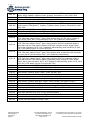
H.2 Paramagnetic O2-sensor
O2-sensor
Measuring range min.
0 – 5 % O2
Measuring range max.
0 – 100 % O2
Power supply
5 V DC – 28 V DC, approx. 1,5W
Output value
4 – 20 mA, galvanic isolated
Response time T90 at 100 ml/min. gasflow
<3s
Max. gasflow
Ambient temperature
300 ml/min.
15 - 30°C, 0 - 60°C with customer’s own compensation
Linearity
< ± 0,1 % O2
Zero setting deviation
<_ 0,1 % O2 / week
Repeatability
< ± 0,05 % O2
Temperature deviation
zero drift
< ± 0,1 % O2 / °C
sensitivity
< ± 1 % of measured value/°C
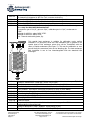
The integrated paramagnetic O2-sensor is designed for incorporation in your analyzer-systems
or for the solution of oxygen measuring problems using a microprocessor or PLC-system.
The modules are maintenance-free, have a long lifetime, give a rapid and accurate signal
response and are virtually insensitive to other gases. They have a compact design which
meets high quality standards. This O2-sensor can be used e.g. for
- Excess oxygen analysis in all types of combustion systems
- Room air monitoring for personnel and product safety
- Monitoring oxygen content in fermentation vessels, biochemical fermenters and sewer gases
- Monitoring atmosphere in fruit stores and hot-houses
- Process analysis for continuous monitoring of required and/or allowable oxygen content
- Monitoring of low-temperature and combustion gases
- Monitoring automotive exhaust and internal combustion engines
- Excess oxygen analysis in controlled atmospheres for systems or packaging in food industry
- Monitoring biological and waste gas content
- Excess oxygen monitoring in processes
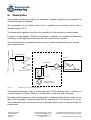
The measuring principle is paramagnetic (partial pressure measuring with a rotatable glass
dumbbell). Oxygen is one of few gases showing significant paramagnetic properties which
can be used for its measurement using the following method:
A small glass dumbbell filled with nitrogen is placed in an inhomogeneous magnetic field
within the measuring cell. The system’s position of rest is defined by a light beam, a mirror
on the dumbbell and a photo detector. The dumbbell is diamagnetic and tends to turn away
from the magnetic field. The paramagnetic oxygen molecules of the sample gas, however,
are drawn into the magnetic field, either displacing the dumbbell or forcing it to turn in the
opposite direction. The turning is stopped by an opposite magnetic field generated by
means of a coil around the dumbbell, the signal of the photo detector (deviation of the
dumbbell from its position at rest) determining the necessary current intensity. The
difference between the current when pure nitrogen is flowing and the current when the
sample gas is flowing across the measuring cell is proportionate to the concentration of
oxygen in the sample gas.
Ankersmid Sampling
Neerlandweg 22
2610 Wilrijk
Belgium
User Manual APS Edition 11/2010
www.ankersmidsampling.com
[email protected]
Page 10 of 20
© Reproduction of this document or its content
is not allowed without permission of Ankersmid.
Technical Details Subject to Change