1
either reflects the maximum score or the minimum score from a set of aligned sequences
(Altschul, 1997). In the case where the maximum score is sought, a match in the aligned
sequence is granted a point, while a mismatch, a gap initiation, a gap extension, or any
deviation within the sequences will result in a penalty that contributes negatively to the
final score (Lesk, 2002). The summation of score bits finalizes the overall score of the
set of aligned sequences.
The scoring function that the algorithm refers to for score computation takes into account
various evolutionary factors. In the case of mutation detection, some substitutions occur
at a higher frequency than others. For example, in nucleotide sequence alignments, the
likelihood of a transition mutation is greater than that of a transversion mutation; that is,
substitution mutation of a purine to purine, or a pyridine to a pyridine are more
commonly observed than replacing a purine with a pyridine, or vice versa (Lesk, 2002).
Therefore, scores should be weighted accordingly to account for the frequency of certain
mutations; that is, a transition mutation should get a higher score than a transversion
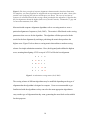
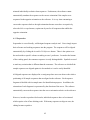
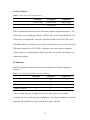
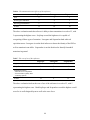
mutation. The following example illustrates the principle of scoring behind a simple
sequence alignment:
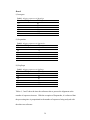
Consider 2 short oligonucleotides
Reference: AATCTA
Query: AAGAT
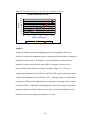
The 2 sequences can be aligned in several ways:
AATCTA
| |
|
AATCTA
|
AATCTA
AATCTA
| |
| |
AATCTA
| |
|
AAGAT--
A--AGAT
AA--GAT
AAG--AT
AAGA--T
0
-15
-8
-8
-8
Score
Match: +3 Gap: -2 Mismatch: 0
9
AATCTA
--A AGAT
-15
Transition: -3 Transversion: -4