1
– Confidence threshold, used to distinguish real target objects from the noise
– TTL (Time to live) field of heartbeat messages to ensure group coherence in case the
sensing distance is farther than the radio transmission distance
• Sensor network topology
– Maximal Delay for Leader Elected Message, should be higher with high sensor node
density to reduce probability of multiple nodes starting to transmit at the same time
– Maximal Delay Leader IREP Message, should be higher with high sensor node density to reduce probability of multiple nodes starting to transmit at the same time
• Characteristics of the expected target objects
– Heartbeat Delay, should be lower when target object is expected to move fast
– Weights of the different leadership election factors will have to be adapted according
to the speed of the target objects, to the predictability of their paths and to the quality
of the sensors on the nodes. This is discussed in Section 4.6
4.3
Feasibility of Energy Level Based Localization
As no existing localization algorithm uses a combination of energy levels of sensors in different
nodes to calculate an object’s position, we performed a small feasibility study [12] to see if this
approach could lead to satisfying results with current sensor nodes. The potential problems are
the low quality of the sensors, especially fluctuating sensor readings or not calibrated sensors,
as well as physical phenomena such as echo and multipath effects.
For the experiments they utilised a number of Embedded Sensor Boards (ESB) from Scatterweb [14]. These sensor nodes are equipped with a MSP430F149 microcontroller, 2 kilobyte
RAM, 60 kilobyte flash memory, an infrared interface, a timer and a low power consuming
radio. They also are equipped with sensors for luminosity, noise detection, vibration, passive
infrared movement detection and a microphone. The manufacturer claims a lifespan for one
battery charge of 5 years with a duty-cycle of 1% sensing and transmitting or 17 years when
sending 25 bytes every 20 seconds.
The passive infrared motion detection sensor (PIR) was used in the experiments, its sensor
readings were fed to a base station, performing the Intensity-based Localization Algorithm (ILA)
which we also use as part of DELTA and explain later in Section 2.4.
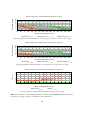
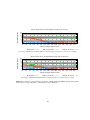
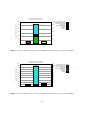
Three different setups for the experiments were created:
1. A small static object (a hand) placed on a table, surrounded by 8 sensor nodes. The object
was positioned at 3 different locations for about 20 seconds each and the average of the
intensities used as input for ILA. The interval was so long as the current PIR sensors
showed a lot of variation. The experiment was conducted 8 times for each of the three
locations, the average distance errors for the locations were 22 cm, 18 cm and 11 cm.
39