1
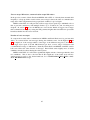
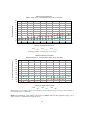
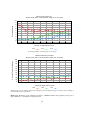
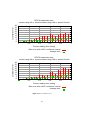
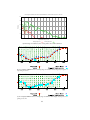
Sensor range 100 meters, communication range 75 meters
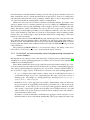
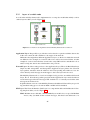
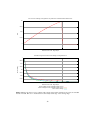
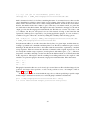
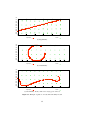
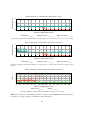
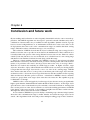
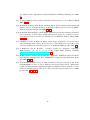
As indicated in Figure 5.10a, DELTA with a TTL set to 2 is definitely inaquedate for a sensor
range bigger than the communication range. Also with a TTL of 3 group coherence starts to
deteriorate at speeds of 50 km/h. For a concrete deployment where the characteristics of the
target object are more or less known and its maximum speed is less than this 50 km/h, this
TTL setting might suffice. With a TTL of 4, group coherence is maintained up to 100 km/h.
Obviously the number of sent messages increases dramatically the higher the TTL parameter is
set. By how much exactly will be shown in a later section.
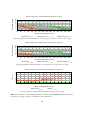
The percentage of passive heartbeat messages that did not need to be sent thanks to DENA’s
triangle rule lies in the area between 20% and 30% for both TTL 3 and 4.
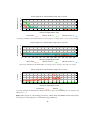
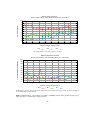
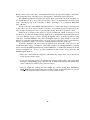
Sensor range 125 meters, communication range 75 meters
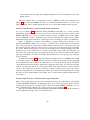
In this scenario, only DELTA with the TTL parameter set to 4 is able to maintain group coherence
satisfactorily up to a speed of about 60 km/h, the other two DELTA configurations create too
many tracking groups for the single present target object before that speed.
Number of sent messages
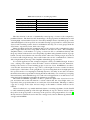
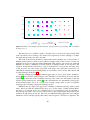
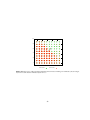
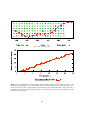
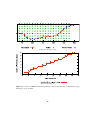
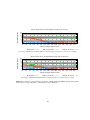
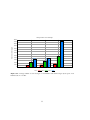
To measure the impact of the TTL settings on the amount of network communication done by
DELTA, we counted the total number of sent messages for several simulation runs in the 3
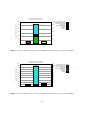
scenarios from above, with a target object speed of 36 km/h. In the resulting Figure 5.12 the size
of the impact is obvious. For the scenario with a sensing range of 3 hops and a communication
range of 3 hops, the average number of sent messages climbs from 860.4 for TTL 2 over 2227.6
for TTL 3 to 3789.8 for TTL 4.
This makes clear that users of a DELTA sensor network should be aware of the characteristics
of their deployment and the expected target objects. Then he has to configure DELTA so that it
has the capability to track target objects at the expected speeds, but do so with a minimal amount
of communication between the nodes. The most important parameters influencing the tracking
performance are beside the TTL, the heartbeat periodicity, the sensor reading periodicity and the
maximum back-off time of the leadership election.
74