1
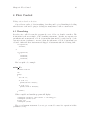
Chapter 5: Pointers
25
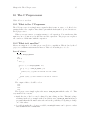
5 Pointers
sorting the programmers from the students
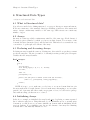
5.1 The Basics
A limitation you may have noticed is that functions can only affect your program via their
return value, so what do you do when you want a function to alter more than one variable?
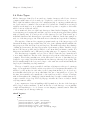
You use pointers. A pointer is a special kind of variable. Pointers are designed for storing
memory address i.e. the address of another variable. Declaring a pointer is the same as
declaring a normal variable except you stick an asterisk ’*’ in front of the variables identifier.
There are two new operators you will need to know to work with pointers. The address of
operator ’&’ and the dereferencing operator ’*’. Both are prefix unary operators. When
you place an ampersand in front of a variable you will get it’s address, this can be store
in a pointer. When you place an asterisk in front of a pointer you will get the value at
the memory address pointed to. As usual, we’ll look at a quick code example to show how
simple this is.
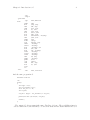
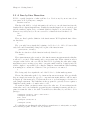
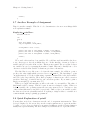
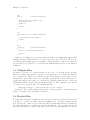
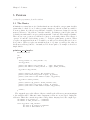
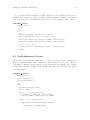
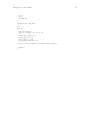
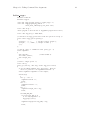
pointers are simple.c
#include <stdio.h>
int
main()
{
int my_variable = 6, other_variable = 10;
int *my_pointer;
printf ("the address of my_variable is
: %p\n", &my_variable);
printf ("the address of other_variable is : %p\n", &other_variable);
my_pointer = &my_variable;
printf ("\nafter \"my_pointer = &my_variable\":\n");
printf ("\tthe value of my_pointer is %p\n", my_pointer);
printf ("\tthe value at that address is %d\n", *my_pointer);
my_pointer = &other_variable;
printf ("\nafter \"my_pointer = &other_variable\":\n");
printf ("\tthe value of my_pointer is %p\n", my_pointer);
printf ("\tthe value at that address is %d\n", *my_pointer);
return 0;
}
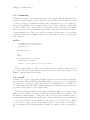
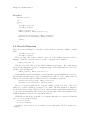
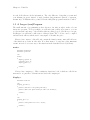
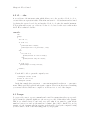
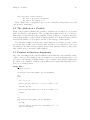
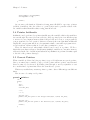
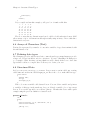
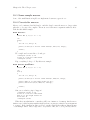
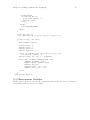
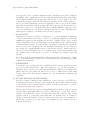
The output shows you the address of the two variables, the addresses your system assigns
to the variables will be different to mine. In printf you’ll notice we used %p to display the
addresses. This is the conversion specifier for all pointers. Anyway, here’s the output I got:
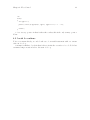
the address of my_variable is
: 0xbffffa18
the address of other_variable is : 0xbffffa14
after "my_pointer = &my_variable":
the value of my_pointer is 0xbffffa18
the value at that address is 6

![4403002491_712_716 menu_EN_A [s]](http://vs1.manualzilla.com/store/data/005650300_1-96030b29e24dd373b0bced3bef593dda-150x150.png)