1
4,484,826
1
2
display screen, a keyboard, a memory for storing for
matted information, and an intercoupling microproces
AUTOMATIC INTERTEXT COLUMN SPACING
sor. In the Horn, et al., type of prompting interactive
FIELD OF THE INVENTION
word processor, multiple text column tables are format
This invention relates to word processing, and more
particularly, to a machine assisted interactive method
ted prior to text entry by invoking a column layout
and means for evenly adjusting the gutters between
columns during formatting of multiple text columns on
a page in a word processing system.
10
BACKGROUND ART
Pascoe, U.S. Pat. No. 4,207,011, issued June 10, i980,
describes the formatting of sequentially stored text col
function mode. Consonantly, menued prompts promi
nently displayed guide the operator in order to struc
ture the column widths and gutters (intercolumn spac—
ing) by repeated keying of text characters or widths and
then inserting space characters over to the next column
position and repeatedly keying in text characters to
de?ne the widths of yet another column. This single
entry line permits the column and gutter widths to be
automatically aligned with tab stops. The formatted
column example line is then vector encoded and saved.
umns by embedding semaphore codes. Upon the side
by»side printout of the stored text columns, the embed
ded codes preserve a synchronous relationship between
their varying line spacings. That is, a code character in
If it is subsequently desired to revise a saved table, its
encoded format line is recalled, rebuilt, and then revised
by entering repeated text and control characters to
line i initiates a memory scan to ascertain the existence
of any counterpart line i to be printed from column 2.
Greek, et al., US. Pat. No. 3,952,852, issued Apr. 27, 20 de?ne an altered width of an existing column or a new
column. In turn, the revised column example line may
1976, discloses a system having a keyboard and printer,
be encoded and saved. There is also provided an auto
a buffer and control, and a multicolumn playout control
matic one character wide gutter insertion when creating
unit. During set-up, a tab ?eld for de?ning the printing
a new column to prevent the operator from failing to
locations of the column, can be set up by operator key.
The columns, which are stored sequentially, are printed 25 include a gutter after formatting his adjacent column.
out in a side-by-side manner, the beginning of each
The Invention
column being de?ned by the keying of a column begin
code. In contrast, word processing systems where text
stream input is stored and displayed, tables of multiple
It is an object of the inventive method for evenly
adjusting the gutters between columns during the for
columns of text or data are formatted by an operator 30 matting of multiple text columns on a page in an interac
involving a displayable scale line on the system. The
tive word processing system formed from a keyboard,
display, memory for storing formatted information, and
an intercoupling microprocessor. The method steps
operator independently ascertains column widths and
gutters, and then must count and enter the tab stops
along the scale line.
Word processing is to be distinguished from text
processing in both the kind and degree of facilities avail
include operator keyboard entry of a line of at least two
able to the operator. Text processing involves the use of
a large capacity CPU shared among multiple terminals
empowered
with
a
text
processor
such
as
SCRIPTS/V S having rapid access to megabytes of fast 40
DASD storage. In text systems, threaded data lists exe
column width examples formed from repeated text and
control characters; and responsive to function key actu
ation, the machine step of modifying the example line
by the automatic insertion of spaced characters in the
gutters between the column examples proportional to
the unoccupied escapement between the page margins
cuted in SCRIPTS permits ?exible operator formatting
divided by the number of gutters. In addition to auto
taking advantage of the sophisticated processing opera
matically producing even spacing between each column
within the vertical page margins, there is also executed
the additional step of adjusting the tab stops within each
column accordingly.
Advantageously, this method is in harmony with
other column layout functions-by-example. Generi
tions on list pointers and indices. To the contrary, word
processing is focused on stand-alone terminals in which 45
letters, small documents, and memos are processed by
microcomputers interacting with limited diskette stor
age of 200 or 300 kilobyte capacity. The documents and
pages are processed as end marked, semi-in?nite, simply
cally, an operator “teaches" the word processor to
structured character strings with few embedded con
format text data for use in a multiple text column table
trols. The comparative absence of highly elaborated
by way of dummy illustration supplemented by auto
data structures saves memory but requires special for
matic assistance.
matting considerations, such as documents composing
BRIEF DESCRIPTION OF THE DRAWING
for tables and the like.
In the IBM Program Product “Document Composi 55
tion Facility/User's Guide", Second Edition, April
1980, IBM publication No. SH20-9l6l-l, at Chapter 5,
nal and external memory, a keyboard, a microprocessor,
pp. 67-69, there is described multicolumn page layout
for the SCRIPT/V S text processing system. SCRIPT
de?nes a multiple column layout requiring operator
speci?cation of column number, width, and left margin
60
position for each column. Thus, the prior art of inter
column spacing is completely operator de?ned with
Ser. No. 305,260, ?led on Sept. 24, 1981 there is de
picted a multiple text column formatting method exe
cuted in an interactive word processing system having a
and intercoupling bus.
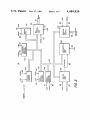
FIG. 2 delineates a partial register organization of the
microprocessor shown in FIG. 1.
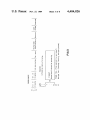
FIG. 3 is a display screen (soft copy) layout organiza
tion of information as viewed by a word processor
operator.
limited, if any, automatic assistance.
In the co-pending Horn and Shipp application, U.S.
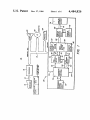
FIG. 1 depicts a word processor system con?gura
tion including soft and hard copy output facilities, inter
65
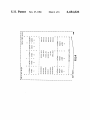
FIG. 4 shows table and column layout spatial de?ni
tions.
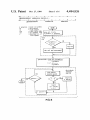
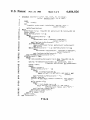
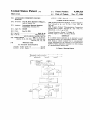
FIG. 5 depicts the method flow diagram of the inven
tion.