1
•
Then, the signal is filtered using a steep lowpass which cuts off at the Nyquist frequency
of the old, lower sample rate. (Figure 2-03 Curve C).
The up conversion filter is called an interpolator. Besides providing correct values for the
new samples, it also prevents images of the input spectrum from appearing in the new, wider
bandwidth.
2.2.3.2
Fractional Ratio Conversion
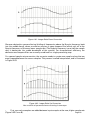
Fractional rate conversion takes advantage of the fact that, where the source and output sample
rates are not related by a simple integer, there is nonetheless a higher clock rate to which both
will have an integer relationship. This is illustrated in Figure 2-03.
Figure 2-03: Fractional Ratio Conversion
Here, the ratio between clock rate A and intermediate rate B is 1:4. In turn, the ratio between
clock rate B and rate C is 3:1. Oversampling at clock rate B therefore enables conversion between
signals sampled at rate A and those sampled at rate C.
In practice, fractional-rate conversion is performed by an FIR lowpass filter which cuts off at the
Nyquist frequency of the lower of the two sample rates (source or output) and is oversampled at
some high frequency to which both sample rates have an integer relationship. The Nyquist filter
prevents aliases (down conversion) or images (up conversion).
Page 21