1
FLAMES-UVES Data Reduction Users’ Manual
VLT-MAN-ESO-19500-3016
27
Input:
• in_cat: Input catalogue with splitted frame(s).
• out_cat: Optional output products catalogue. Default ‘+’.
• ref_cat: Optional reference catalogue containing a DRS setup table and a guess line table (output of
PREDICT/FLAMES or FMTSTAB/FLAMES), and the fibre-order table (output of ORFSLT/FLAMES).
Default ‘+’.
• mode: Mode how to perform the calibration. Optional. Default is ‘Auto’.
– Auto: the calibration will be done in guess mode, i.e. WLCMTD=GUESS will be used in the
command IDENTI/ECHELLE of the ECHELLE context.
– Interactive: the calibration will be done interactively. WLCMTD is set to PAIR for the call to
IDENTI/ECHELLE.
• resol: Optional switch to produce spectral resolution plots. Set it to ‘Y’ to create spectral resolution
plots. Default: ‘Y’.
• fits: FITS output files ? Set it to ‘Y’ to create FITS output files, having appropriate FITS headers, which may be ingested into the calibration database. This make sense only outside the pipeline
environment (which anyway as such has final product in FITS format) Optional. Default: ‘N’.
• precision: Parameter to set precision of solution. Defaults are set by the MIDAS keywords
DRS_WCAL_DC and DRS_WCAL_TOL (4,0.6). DRS_WCAL_DC sets the order of the wavelength
solution. A value of 4 demonstrates as more robust than 5, which lead to a more precise solution.
DRS_WCAL_TOL set a threshold in pixel units. Line identifications which are distant from the found
solution more than TOL are considered as outliers. TOL should be less than 1. Small values of TOL
may lead to higher precision, but also to less identifications. Is suggested to adopt a value such that at
least 7-10 lines per order (and a given fibre) are found.
Output: see output of WAVECAL/UVES. It produces 2 tables lin{wc}x.tbl, where wc is the central
wavelength (in nm, 3 significant figures) setting, and x = L (lower chip) or U (upper chip).
Command description:
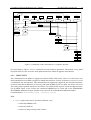
Built as a modification of the command WAVECAL/UVES, extracts the echelle orders by means of the
order table created using ORFSFF/FLAMES and determines the dispersion relation for each order using
IDENTI/ECHELLE. The line identification will be done using as a first guess solution a previously created
line table either from a physical model (PREDICT/FLAMES) or through an interactive run (P4=I) where you
have to identify 2 pairs of lines. Successful calibration solutions can be verified looking at the residual plots
(see [1] the description of the command WAVECAL/UVES, for clarifications. In particular chapter 3 of [1]
provides also a high level description with an examples of “residuals” and “resolution” plots). Good resolution
plots have typically residuals of the order of 0.01 or better Angstrom.
6.3.8 REDUCE/FLAMES
Command Syntax: REDUCE/FLAMES in_science_cat out_science_cat ref_cat [extract]
[bias_val] [filter_sw] [saturation_threshold] [drs_sci_cubify,drs_cubify]
Input:
• in_science_cat: Catalog of input science frames (after SPLIT/UVES).