1
HEC RAS analysis
Input
14/27
MATRA Project
ITC WRS: Gabriel N. Parodi
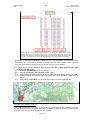
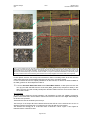
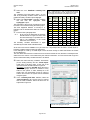
already entered. The table should look similar to Table 6, but it is not essential.
This concludes the input of the cross section data.
Junctions
There are 2 junctions in the model. In the junctions the user has
to enter the reach lengths across the junction, the tributary
angle and the calculation method. All this information can be
read in the User Manual of HecRas.
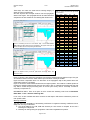
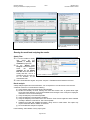
16 Press the “Junction” button in the Geometric Data
editor. The first Junction appears
16.1
Enter Description: “Division Upper into Lower and
LowerPoti”. Description is only for information.
16.2
There are two lengths to input:
16.2.1
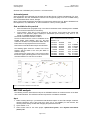
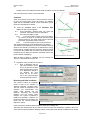
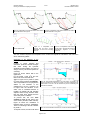
From Rioni Upper to Rioni Lower Poti (380.91
m). There is an angle of 30º between the Rioni Upper
and the Rioni Poti. The angle will be used in case that
Momentum computation mode is selected
16.2.2
From Rioni Upper to Rioni Lower (376.54 m)
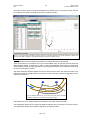
The mentioned distances can be obtained also from Table 4.
The selection of the Method for the Junction calculation must be
read from the manual. For steady flow we will select the energy
method and for unsteady flow the new energy balance method
to overcome the problem that the sections at the junctions are
measured very far apart (XS should be measured close to the
junction without overlapping).
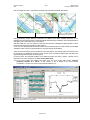
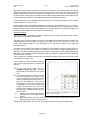
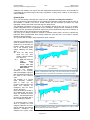
Figure 24: Distances in the Junction 1.
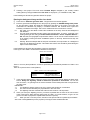
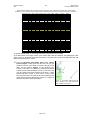
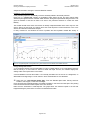
Figure 25: Distances in the Junction 2.
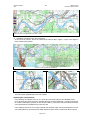
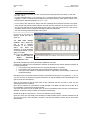
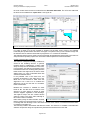
When all data is added to HECRAS, the user interface for
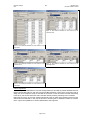
Junction 1 should look like in Figure 26.
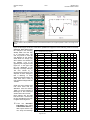
17 Repeat the same procedure for Junction 2.
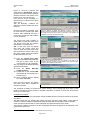
17.1
Enter a description and the
rest of the information. At the
end of the process the data
input should be like in Figure
27. If Momentum method is
not selected, the input
angles will not be stored.
This is OK. Figure 27Figure
27 shows the final outcome.
Boundary and initial conditions
The success or failure in a hydraulic
model is tight to the selection of
adequate boundary conditions (BC).
The river system is composed by two
exclusive (or) environments: the
system under analysis and the
elements composing the external
influence over the system under
analysis. The system is analized in
isolation but boundary conditions are
required to impose the constraints and
forces that the external influences
subject the system.
Figure 26: Junction 1 input.
Figure 27: Junction 2 input.
In this exercise two situations will be analyzed: steady and unsteady flow.
The steady flow assumes that at any section in the river system the discharge is constant in time. Two
cross sections may have different discharge values, but they will remain always invariable in time. Steady
Page 14 of 27