1
5
Solution techniques
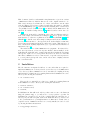
The ODESolve 1+ interface module pre-processes the problem and applies any
conditions to the solution. The other modules deal with the actual solution.
ODESolve 1+ first classifies the input ODE according to whether it is linear or
nonlinear and calls the appropriate solver. An ODE that consists of a product
of linear factors is regarded as nonlinear. The second main classification is based
on whether the input ODE is of first or higher degree.
Solution proceeds essentially by trying to reduce nonlinear ODEs to linear
ones, and to reduce higher order ODEs to first order ODEs. Only simple linear ODEs and simple first-order nonlinear ODEs can be solved directly. This
approach involves considerable recursion within ODESolve 1+.
If all solution techniques fail then ODESolve 1+ attempts to factorize the
derivative of the whole ODE, which sometimes leads to a solution.
5.1
Linear solution techniques
ODESolve 1+ splits every linear ODE into a “reduced ODE” and a “driver” term.
The driver is the component of the ODE that is independent of y, the reduced
ODE is the component of the ODE that depends on y, and the sign convention
is such that the ODE can be written in the form “reduced ODE = driver”. The
reduced ODE is then split into a list of “ODE coefficients”.
The linear solver now determines the order of the ODE. If it is 1 then
the ODE is immediately solved using an integrating factor (if necessary). For a
higher order linear ODE, ODESolve 1+ considers a sequence of progressively more
complicated solution techniques. For most purposes, the ODE is made “monic”
by dividing through by the coefficient of the highest order derivative. This
puts the ODE into a standard form and effectively deals with arbitrary overall
algebraic factors that would otherwise confuse the solution process. (Hence,
there is no need to perform explicit algebraic factorization on linear ODEs.) The
only situation in which the original non-monic form of the ODE is considered is
when checking for exactness, which may depend critically on otherwise irrelevant
overall factors.
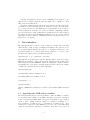
If the ODE has constant coefficients then it can (in principle) be solved using
elementary “D-operator” techniques in terms of exponentials via an auxiliary
equation. However, this works only if the polynomial auxiliary equation can be
solved. Assuming that it can and there is a driver term, ODESolve 1+ tries to
use a method based on inverse “D-operator” techniques that involves repeated
integration of products of the solutions of the reduced ODE with the driver.
Experience (by Malcolm MacCallum) suggests that this normally gives the most
satisfactory form of solution if the integrals can be evaluated. If any integral fails
to evaluate, the more general method of “variation of parameters”, based on the
Wronskian of the solution set of the reduced ODE, is used instead. This involves
only a single integral and so can never lead to nested unevaluated integrals.
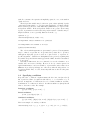
If the ODE has non-constant coefficients then it may be of Euler (sometimes
ambiguously called “homogeneous”) type, which can be trivially reduced to an
ODE with constant coefficients. A shift in x is accommodated in this process.
Next it is tested for exactness, which leads to a first integral that is an ODE
of order one lower. After that it is tested for the explicit absence of y and low
order derivatives, which allows trivial order reduction. Then the monic ODE is
9